What a Healthy Plate Looks Like on The Paleo Diet
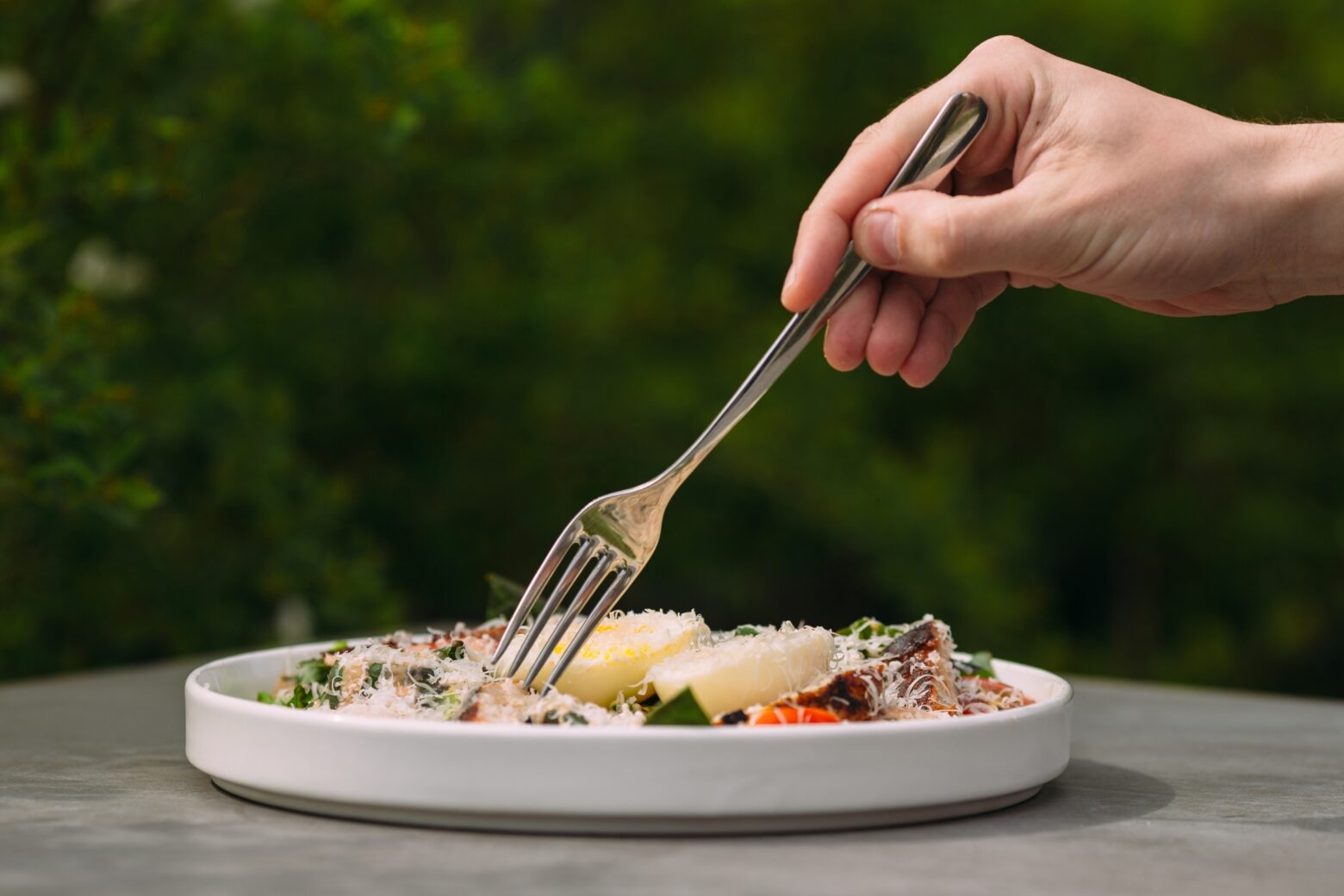
What does a healthy plate actually look like on The Paleo Diet®? Despite common assumptions, The Paleo Diet isn’t a carnivore plan, a raw food regimen with added meat, or a meat-heavy diet with some vegetables on the side. Inspired by iterations of the USDA’s dietary guidelines, we at Paleo HQ formulated a Paleo-style daily plate, clarifying what to prioritize (and what to skip) when meal planning each week.
A Brief History of the Food Pyramid
The U.S. Department of Agriculture (USDA) has finally turned the Food Pyramid upside down. The iconic chart many Americans grew up with was heavy on grains and lighter on proteins and healthy fats. At the beginning of 2026, that model was inverted. The updated pyramid now emphasizes proteins, healthy fats, and fresh produce, while minimizing highly processed, refined carbohydrates.

The original Food Guide Pyramid debuted in 1992 and built on the “basic four” food groups (milk, meat, fruits & vegetables, and grains) that had guided nutrition policy since 1956. Foods were stacked by recommended intake, with grains and cereals forming the base and fats and sweets at the top.1
In 2005, the USDA introduced MyPyramid, which used vertical color bands and added physical activity, represented by a stairway on the left side. Unfortunately, the abstract design was confusing for consumers and ultimately led to the introduction of MyPlate in 2011.2
MyPlate was a simpler design. It used a circle as the canvas and still included the basic four food groups, but encouraged balanced portions rather than strict serving sizes. Vegetables and grains made up slightly larger portions than fruits and proteins, and dairy was depicted with a small circle representing a glass of milk on the side.3
Over the years, MyPlate faced criticism from integrative and functional medicine practitioners. Even Harvard’s School of Public Health released its own Healthy Eating Plate to address the perceived shortcomings of MyPlate.4 These critiques ultimately set the stage for the newest version: the New Pyramid.5
What’s New in the 2026 New Pyramid?
The New Pyramid features three cornerstone food categories of a healthy diet:
- Protein, Dairy & Healthy Fats
- Vegetables & Fruits
- Whole Grains
Oats, rice, and true sourdough are the preferred sources of whole grains, with the guidelines recommending against ultra-processed sources like cereals.
In addition, rather than minimizing sweets, the New Pyramid eliminates added sugars entirely. It recommends only consuming naturally occurring sugars found in fruits and dairy. Overall, this version represents a significant improvement from previous USDA dietary guidelines.
A Paleo Response to the New Pyramid
According to Trevor Connor, CEO of The Paleo Diet, the 2025-2030 Dietary Guidelines for Americans—though not perfect—reflect long-overdue changes. The overall direction of the guidelines and the shift in principles they promote align more with those of The Paleo Diet—especially the encouragement to “eat real food.”
One of the most meaningful improvements is the prioritization of protein at every meal. Instead of the long-standing recommendations of 0.8 grams per kilogram of body weight, the new guidelines suggest 1.3 to 1.6 grams per kilogram, which is more in line with current research. However, it’s important to note that “protein” in this framework doesn’t refer only to meat, eggs, and fish.6 It also includes beans, peas, lentils, nuts, and seeds.
The recommendation to eat fruits and vegetables throughout the day is another welcome change. It’s well established that a higher fruit and vegetable intake is associated with lower all-cause mortality.7 That change alone is a clear improvement over the Standard American Diet (SAD) and the original Food Pyramid.
Another highlight of the new recommendations is the importance placed on healthy fats, such as olive oil, nuts, and avocados. Saturated fats are no longer ostracized but instead included alongside monounsaturated fats and polyunsaturated fats such as omega-3s and omega-6s.
The new guidelines also stress adequate fiber intake for gut health and recommend limiting sodium from ultra-processed foods. These two tenets we definitely support within The Paleo Diet framework. At last, the guidelines are beginning to reflect scientific evidence. However, they are not without flaws.
Why “Eat Real Food” Still Isn’t Enough
All that said, we at The Paleo Diet cannot get behind the new recommendations 100%. After all, they are not promoting a Paleo way of eating. Dairy, legumes (including soy), and whole grains are still included in the new guidelines, and none of those foods would have been eaten by our Paleolithic ancestors. These food groups are excluded on The Paleo Diet for good reason.
- Dairy is one of the most common food allergens. Many people struggle with lactose intolerance or sensitivity to casein, a milk protein. High dairy intake also skews the calcium-to-magnesium ratio dramatically. While the ideal ratio is roughly 2:1, dairy products average closer to 12:1. While you’d think the high calcium levels would be beneficial to bone health, dairy consumption is actually associated with an increased risk of bone fractures and all-cause mortality.8
- Grains are rich in antinutrients such as phytates, which bind to minerals, reducing absorption in the gut.9 Wheat, barley, rye, and spelt also contain gluten, which contributes to chronic inflammation and increased intestinal permeability (i.e., “leaky gut”). It’s well known that chronic inflammation and leaky gut are two of the three pillars that set the stage for autoimmune disease.10
- While legumes do provide a complete amino acid profile, they’re avoided on The Paleo Diet due to their high levels of lectins, saponins, phytates, and other antinutrients, which can damage the body. One lectin in particular, phytohemagglutinin, is known to damage the intestinal lining. It can then cross the gut barrier and enter circulation, potentially leading to chronic illness in those who are susceptible.11
What a Healthy Plate Looks Like on The Paleo Diet
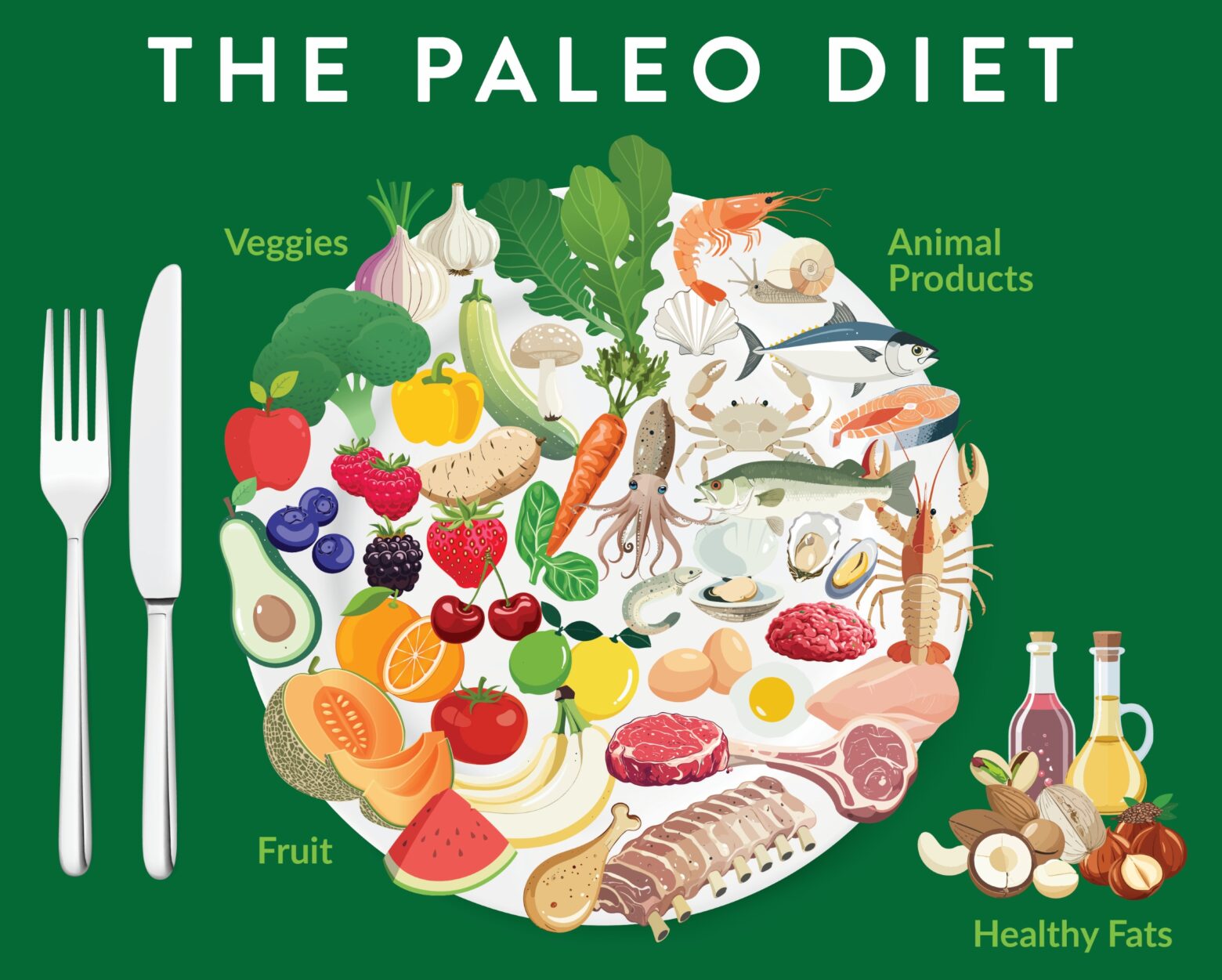
A Paleo Plate that follows a flexible ancestral nutrition framework would include plenty of vegetables, colorful fruits, a moderate amount of high-quality animal protein (seafood, lean meats, and eggs), and modest portions of nuts or seeds. It would exclude grains, dairy, legumes, sugar, added salt, and all other food groups not included on a Paleolithic Era-inspired diet.
Like the New Pyramid, a Paleo Plate wouldn’t focus on a particular macronutrient ratio, like 25% protein, 50% carbs, et cetera, as previous versions did. Instead, the focus is on getting a variety of nutrient-dense whole foods (organic and sustainably sourced when possible).
Dr. Cordain determined the five most nutrient-dense foods several years ago using Nutritionist Pro Software. The verdict? These five won out:
- Seafood
- Vegetables
- Fruits
- Lean meats
- Hard-boiled eggs
Seafood only came out ahead of vegetables due to their vitamin B12 content. Otherwise, vegetables topped the list as the overall most nutrient-dense foods humans could eat. If you focus your attention on these five foods, you’ll be well on your way to vibrant health and energy. That said, here are a few more details for creating a healthy Paleo Plate.
Paleo Plate Guidelines
In general, as long as you eat a variety of foods on The Paleo Diet, you’ll get more than enough nutrients (you can double-check with a free app like Cronometer). However, there are a few things to keep in mind when building a healthy plate:
- Limit nuts and seeds. It’s important to consume nuts and seeds sparingly, as they can tip the fatty acid ratio too far in the wrong direction. The ideal ratio is 2:1 omega-6 to omega-3 or lower. Eating large amounts of almond flour baked goods is certainly not Paleo.
- Mind sodium balance. When choosing proteins or seasoning your foods, keep in mind that the ideal potassium-to-sodium ratio is at least 5:1. Highly processed meats especially can pack high amounts of sodium, which is why we recommend minimally processed and sustainably raised proteins.
- Avoid falling into meat-only meals. Paleo is not carnivore, nor does it prioritize meat. A healthy plate is made up of a variety of nutrient-dense plant foods and animal products.
- Include organ meats. For added nutrition, consider including organ meats like liver, tongue, kidneys, and even heart as a part of your protein intake. These cuts of meat are rich in bioavailable vitamins, minerals, enzymes, and coenzymes, including CoQ10. To ease into eating organs, some brands sell ground beef with organ meats already blended in.
In general, a healthy Paleo Plate would emphasize a variety of organic vegetables and fruits complemented by wild, free-range, or grass-fed proteins. Healthy fat options would include beef tallow, eggs, avocados, olive oil, and coconut oil. These fats, along with a variety of fresh herbs and spices, enhance flavor and supply additional antioxidants for a healthy inflammatory response.
Final Thoughts on the Paleo Plate
Following The Paleo Diet doesn’t have to mean making each meal a Paleo Plate and following it to a T. Like the New Pyramid, the above chart is meant to provide an overall guide to help with grocery shopping and planning meals each week. The main points to remember when aiming for a healthy plate are to eat real foods and to focus on nutrient density. Following those tenets consistently promotes meals that are lower in toxins, more satisfying, and deeply nourishing to the body.
References
- Magazine S, Blakemore E. Grab Your Fork and Travel Back in Time With These Old USDA Dietary Guidelines [Internet]. Smithsonian Magazine. 2016. Available from: https://www.smithsonianmag.com/smart-news/travel-back-time-these-old-usda-dietary-guidelines-180957741/
- Raikar SP. Food pyramid | Origins, History, Variations, Debates, & Facts | Britannica [Internet]. www.britannica.com. 2023. Available from: https://www.britannica.com/science/food-pyramid
- U.S. Department of Agriculture. MyPlate [Internet]. MyPlate. U.S. Department of Agriculture; 2025. Available from: https://www.myplate.gov/
- Harvard University. Healthy Eating Plate [Internet]. The Nutrition Source. The President and Fellows of Harvard College; 2023. Available from: https://nutritionsource.hsph.harvard.edu/healthy-eating-plate/
- Kennedy, Rollins Unveil Historic Reset of U.S. Nutrition Policy, Put Real Food Back at Center of Health [Internet]. HHS.gov. 2026. Available from: https://www.hhs.gov/press-room/historic-reset-federal-nutrition-policy.html
- U.S. Department of Agriculture. Protein foods [Internet]. www.myplate.gov. 2020. Available from: https://www.myplate.gov/eat-healthy/protein-foods
- Wallace TC, Bailey RL, Blumberg JB, Burton-Freeman B, Chen C-yO, Crowe-White KM, et al. Fruits, vegetables, and health: A comprehensive narrative, umbrella review of the science and recommendations for enhanced public policy to improve intake. Critical Reviews in Food Science and Nutrition. 2019 Jul 3;60(13):1–38.
- Michaelsson K, Wolk A, Langenskiold S, Basu S, Warensjo Lemming E, Melhus H, et al. Milk intake and risk of mortality and fractures in women and men: cohort studies. BMJ [Internet]. 2014 Oct 28;349(oct27 1):g6015–5. Available from: http://bmj.com/content/349/bmj.g6015
- Couzy F, Mansourian R, Labate A, Guinchard S, Montagne DH, Dirren H. Effect of dietary phytic acid on zinc absorption in the healthy elderly, as assessed by serum concentration curve tests. The British Journal of Nutrition [Internet]. 1998 Aug;80(2):177–82. Available from: https://pubmed.ncbi.nlm.nih.gov/9828759/
- Fasano A. Leaky Gut and Autoimmune Diseases. Clinical Reviews in Allergy & Immunology. 2011 Nov 23;42(1):71–8. Available from: https://pubmed.ncbi.nlm.nih.gov/22109896/
- Vojdani A, Afar D, Vojdani E. Reaction of Lectin-Specific Antibody with Human Tissue: Possible Contributions to Autoimmunity. Journal of Immunology Research [Internet]. 2020 Feb 11;2020. Available from: https://www.ncbi.nlm.nih.gov/pmc/articles/PMC7036108/
Betsy Schroeder
Betsy does research and writing for a few different websites in the natural health field after taking Masters level courses in Nutrition & Functional Medicine through the University of Western States.
More About The Author
Learn About the Diet


The Paleo Diet® Newsletter
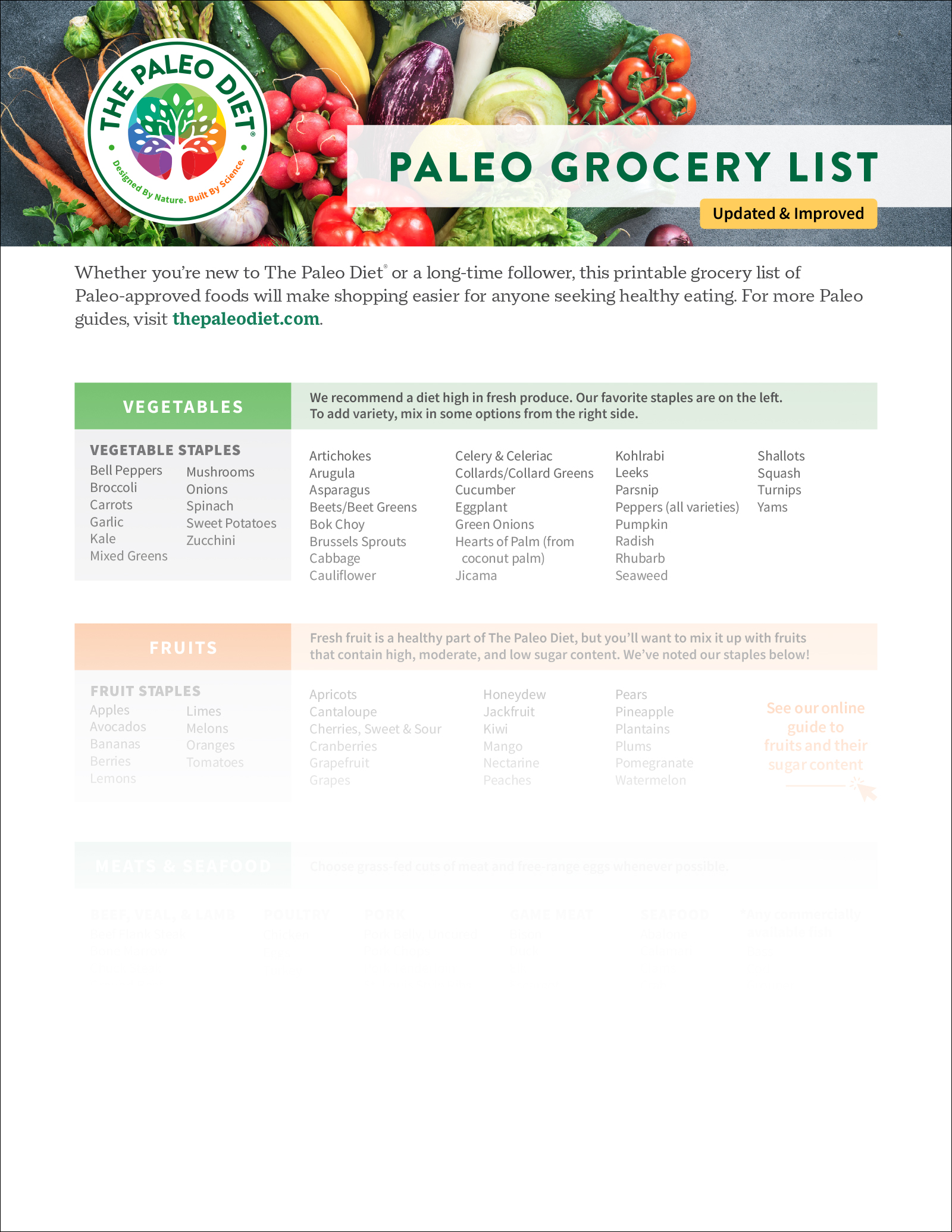
Sign up to get info on healthy nutrition, free recipes, meal prepping, and the latest health research. New subscribers will also receive our Official Paleo Grocery List!
