What Are Seed Oils, and Why Are They So Controversial?
What You’ll Learn
In this article, you’ll learn what seed oils are, what the science says about their effects on inflammation, cardiovascular health, and cancer risk, and why The Paleo Diet® recommends paying attention to the ratios we ate in evolutionary times.

Scroll through any health-focused social media feed, and you’ll find seed oils positioned somewhere between “perfectly fine” and “the root of all modern disease.” However, the reality lands somewhere slightly messier. The science is genuinely complex, but the Paleo perspective offers a framework for making sense of it.
What Are Seed Oils?
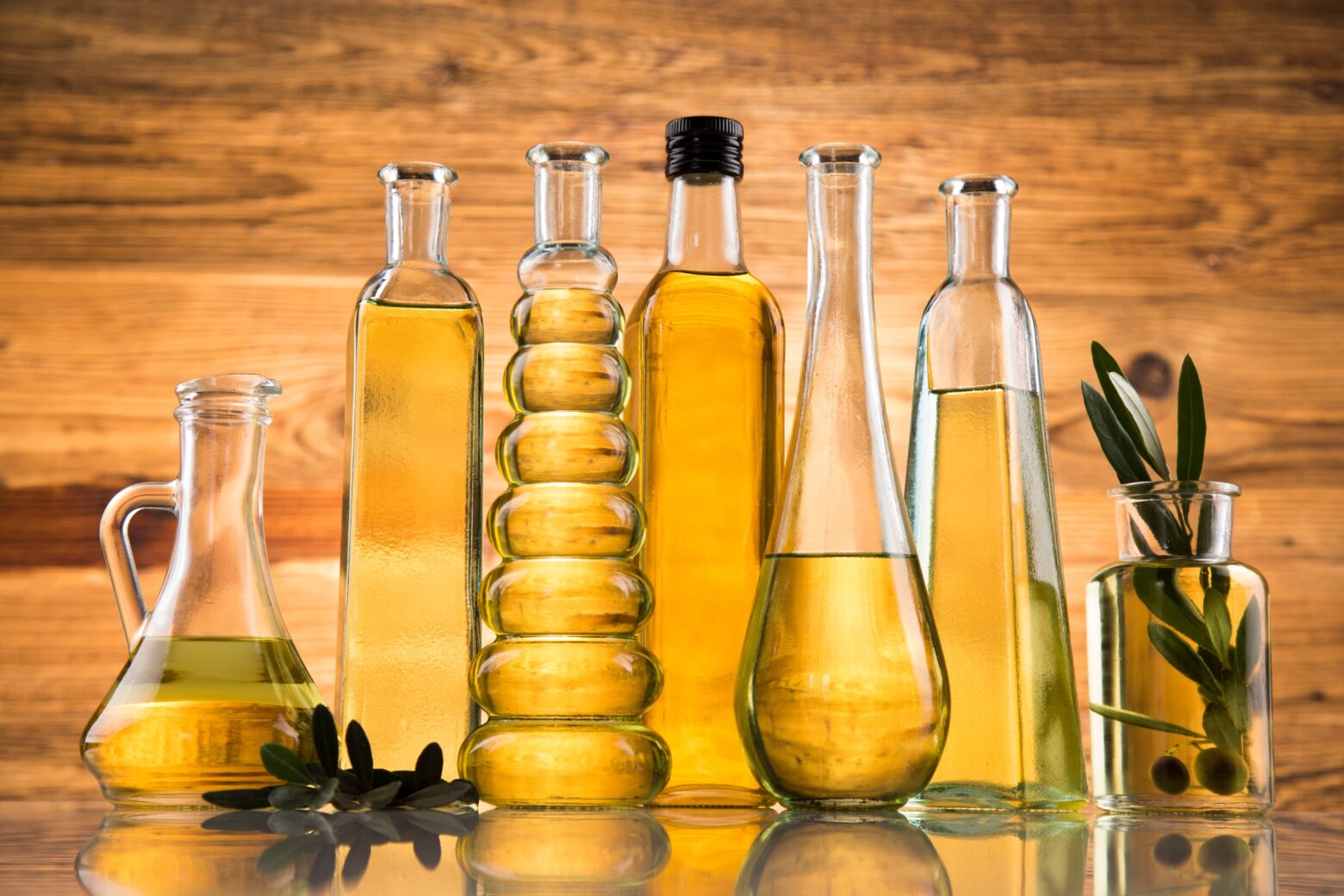
Seed oils, often labeled vegetable oils, are oils extracted from the seeds of plants. Common examples include soybean, corn, sunflower, safflower, canola, cottonseed, and grapeseed oil. They became a dominant part of the American food supply over the 20th century, largely through their widespread use in processed foods, fast food frying, and packaged snacks.
What most seed oils share is a high concentration of linoleic acid, an omega-6 polyunsaturated fatty acid. Linoleic acid is an essential fatty acid, and the body cannot produce it, so it must come from food. The questions worth asking here, though, are about the quantity, source, and how much linoleic acid we need.
What Our Bodies Were Designed to Handle
To understand why seed oils are a concern from a Paleo perspective, it helps to understand how omega-6 and omega-3 fatty acids interact in the body. Both families of fats compete for the same metabolic enzymes and produce very different signaling molecules. Omega-6 fatty acids can produce both pro- and anti-inflammatory compounds, while omega-3 fatty acids are widely recognized for their anti-inflammatory properties.
The key is balance. A 2018 review in Open Heart concluded that maintaining a low omega-6 to omega-3 ratio is essential for reducing inflammation, with an ideal ratio between 4:1 and 1:1.¹ The modern Western diet, driven largely by seed oil consumption, commonly runs 10:1 to 20:1, far outside that range. Soybean oil is approximately 55% linoleic acid. Corn oil is 53%. These concentrations have no natural equivalent, and our physiology has no evolutionary precedent for processing them at the levels now typical in the Western diet.
RELATED: The Importance of the Omega-6/Omega-3 Ratio to Human Health
The Cardiovascular Argument
The strongest argument in favor of seed oils comes from cardiovascular research. Bill Harris, PhD, a fatty acid researcher and co-developer of the Omega-3 Index, says of his research: “We found that the higher the levels of linoleic acid [in the blood], the lower the risk for heart disease, and a lower risk for total mortality, including lower risk for cancer mortality.” These findings were based on objective blood biomarkers rather than dietary recall surveys.
A 2019 review published in Circulation found that higher linoleic acid levels in blood and tissue were significantly associated with lower risk of cardiovascular disease events and mortality.2 A 2014 analysis also published in Circulation similarly found that replacing saturated fat with linoleic acid-rich polyunsaturated fat was associated with reduced coronary heart disease risk.3
On the inflammation front, the picture is also less alarming than critics may suggest. Harris points to randomized trials and cross-sectional studies showing that higher linoleic acid intake does not appear to increase inflammatory biomarkers, and in some studies, is associated with lower levels of inflammation.
Part of what makes the seed oil debate so hard to resolve is that researchers often study individual fatty acids in isolation, but our bodies don’t metabolize fats that way. Even in the studies above, they couldn’t definitively conclude if the anti-inflammatory effects were due to the omega-6s themselves or because of what they were replacing (such as sugars and processed saturated fats.) The results shift depending on what each fat is being compared to, how the study is designed, and what else is in the diet.
The Paleo Concern: Ratio, Oxidation, and Long-Term Risk
Accepting that cardiovascular data do not paint seed oils as a simple villain doesn’t mean seed oils are without concern. The Paleo framework highlights three concerns that extend beyond cardiovascular endpoints alone.
The first is the ratio problem. While Harris argues that both higher linoleic acid and higher EPA and DHA are independently beneficial, the Paleo position is that the sheer volume of omega-6 from seed oils has fundamentally disrupted the fatty acid balance our bodies evolved to maintain. We need all fats, including omega-6. We don’t need them in concentrations that have never existed in any natural food source.
The second involves the COX-2 inflammatory pathway. When omega-6 fatty acids are converted to arachidonic acid and then acted upon by the COX-2 enzyme, they produce prostaglandins—signaling molecules linked to inflammation. Dr. Chad Larson notes that this is more pronounced “if omega-3 intake remains chronically low for months or years at a time.”
A 2025 meta-analysis in Nutrition and Diabetes found that higher dietary linoleic acid intake was associated with increased colorectal and rectal cancer risk across 20 prospective cohort studies, though the authors noted that tissue levels of linoleic acid showed no such association and called for caution in interpreting findings given potential confounders.⁴
The third is oxidation. Polyunsaturated fats are chemically unstable and prone to oxidizing under heat, light, and repeated use, which is how they are used in restaurant fryers and processed food manufacturing. Larson draws a sharp distinction between fresh oil used at low heat and the same oil “heated, reheated, and chemically stabilized for months on a warehouse shelf,” noting that the oxidation profiles of the two are “night and day.”
What This Means for a Paleo Approach
The Paleo Diet prioritizes the right fats in evolutionary proportions. That means prioritizing whole-food fats, such as avocado, wild-caught fish, nuts, seeds, and pastured eggs, and getting animal fats from grass-fed and pasture-raised sources, which are naturally higher in monounsaturated and saturated fats and lower in linoleic acid. It also means using Paleo-approved oils like olive, avocado, macadamia, and coconut, that have very different fatty acid profiles from industrial seed oils.
Macadamia oil, for instance, has the lowest omega-6 content of any nut oil (approximately 1% to 2%) and the highest monounsaturated fat content of any Paleo-friendly oil. Olive oil and avocado oil, while higher in omega-6 than macadamia, are still far lower than seed oils and deliver significant monounsaturated fat alongside antioxidant compounds.
RELATED: Which Cooking Oils Are Healthiest and Paleo?
Still, as The Paleo Diet CEO, Trevor Connor, points out: “No cooking oil, even the ones we recommend, exist in nature. Any cooking oil, if overconsumed, can potentially have negative health effects. However, we feel that the benefit of cooking food to eliminate contaminants like bacteria is worth the compromise. We recommend the oils we do because we feel they are much less of a compromise than others.”
Adequate omega-3 intake is equally important. Getting 0.5 to 1.8 grams of EPA and DHA daily from wild-caught fish or high-quality fish oil helps restore the omega-6-to-omega-3 balance disrupted by seed oil consumption.
Ultimately, the goal is not to eliminate omega-6 entirely. It’s to return to the proportions our physiology evolved to manage. The Paleo Diet has always offered practical guidance for navigating questions like this: prioritize whole foods and favor fats that existed long before industrial processing.
References
- DiNicolantonio, J. J., & O’Keefe, J. H. (2018). Importance of maintaining a low omega-6/omega-3 ratio for reducing inflammation. Open Heart, 5(2), e000946. https://doi.org/10.1136/openhrt-2018-000946
- Marklund, M., Wu, J. H. Y., Imamura, F., Del Gobbo, L. C., Fretts, A., de Goede, J., & Shi, P. (2019). Biomarkers of dietary omega-6 fatty acids and incident cardiovascular disease and mortality: An individual-level pooled analysis of 30 cohort studies. Circulation, 139(21). https://www.ahajournals.org/doi/10.1161/CIRCULATIONAHA.118.038908
- Farvid, M. S., Ding, M., Pan, A., Sun, Q., Chiuve, S. E., Steffen, L. M., Willett, W. C., & Hu, F. B. (2014). Dietary linoleic acid and risk of coronary heart disease: A systematic review and meta-analysis of prospective cohort studies. Circulation, 130(18). https://pubmed.ncbi.nlm.nih.gov/25161045/
- Atashi, N., Eshaghian, N., Anjom-Shoae, J., Askari, G., Asadi, M., & Sadeghi, O. (2025). Dietary intake and tissue biomarkers of omega-6 fatty acids and risk of colorectal cancer in adults: A systematic review and dose-response meta-analysis of prospective cohort studies. Nutrition and Diabetes, 15, 17. https://doi.org/10.1038/s41387-025-00367-w
Tiffany Nieslanik
Tiffany is a freelance writer covering health and wellness, parenting, lifestyle, and consumer technology. With a passion for research-backed storytelling and a personal interest in food as medicine, she brings a thoughtful approach to writing about wellness and nutrition.
More About The Author
Health and Nutrition Trends




The Paleo Diet® Newsletter
Sign up to get info on healthy nutrition, free recipes, meal prepping, and the latest health research. New subscribers will also receive our Official Paleo Grocery List!
