GLP-1 and Muscle Loss: Why Strength Matters (and How to Protect It)

What You’ll Learn
Semaglutide medications that mimic the natural hormone glucagon-like peptide-1 (GLP-1), are gaining popularity, but some wonder if they cause a loss of lean muscle. In this article, learn about the concern with GLP-1 and muscle loss and how you can protect yourself if the medication is prescribed to you.
GLP-1 agonists and semaglutide are medications that mimic the natural hormone glucagon-like peptide-1 (GLP-1). This hormone is released from the gut after eating and plays a significant role in regulating blood sugar and appetite. When someone takes a GLP-1 agonist such as Ozempic or Wegovy, the drug activates the same receptors as the natural hormone, leading to better blood sugar control, reduced appetite, and weight loss.1
RELATED: Paleo-Friendly Foods That Support GLP-1 Activity
While these drugs were initially developed to treat type 2 diabetes, they are now also prescribed for people with metabolic dysfyunction2 or obesity,3 and some people are turning to them for general weight loss. All rapid weight-loss methods,4 from diets to surgery to GLP-1s, can cause some loss of lean mass, leaving patients and providers wondering how semaglutide and muscle loss might affect overall healthspan.
Why Is Muscle Mass Important to Health and Longevity?
There is a myth that all weight loss is good weight loss. In reality, loss of lean mass is associated with higher mortality, independent of body fat and BMI.5 One of the benefits of muscle is that it burns through blood sugar very efficiently, making it a primary metabolic machine in our bodies. Katie Sorensen, NP-C, says this process helps us use energy from food appropriately, reducing the risk of metabolic diseases, including prediabetes, diabetes, and hyperlipidemia.
Good muscle mass also helps keep our bones strong as we age, which combats osteoporosis and frailty and reduces the risk of falls. “Raising or preserving skeletal muscle mass should be a core objective in weight-loss/health-span work—not just fat reduction,” says Sorensen.
Rudolph Eberwein, MD, agrees. “The emerging concept of ‘musclespan’—how long your muscles stay strong and functional—is increasingly seen as a core pillar of longevity, because muscle supports insulin sensitivity, mobility, balance, and resilience after illness or surgery. Muscle is your metabolic retirement account. You spend it down every decade unless you intentionally keep depositing with protein and resistance training,” says Eberwein.
How GLP-1 and Muscle Loss Are Related
While these drugs do lead to a reduction in fat, they can also cause a loss of muscle if it isn’t countered. But it’s not that the medicine itself that causes muscle mass loss. It’s that it influences behavior and metabolic context in the body.
GLP-1 agonists significantly shift hunger, satiety, and food-reward signaling, which leads to lower overall eating.6 This drop in eating often includes key macronutrients, like protein, unless it’s intentionally prioritized at each meal. Beyond the shift in hunger, users may also experience nausea or food aversion, further limiting nutritional intake. If you’re not eating enough, your body doesn’t have the fuel it needs for workouts, and you can start breaking down more muscle than you’re building.
“GLP-1s don’t ‘melt your muscle’ by design—they reduce appetite so aggressively that people under-eat protein and stop lifting. The drug is the accelerator; lifestyle is the steering wheel,” says Eberwein.
Tips for Maintaining Muscle Mass While Using GLP-1 Agonists
The best way forward is to be aware of how GLP-1 agonists might impact your eating and lifestyle habits and then work to counteract any potential negatives. Here are some evidence-based strategies to maintain or rebuild muscle while using GLP-1s.
Prioritize Protein
While historic guidelines suggested people aim for 0.8–1 gram of lean proteins (like eggs, wild-caught fish, poultry, or grass-fed beef) per pound of body weight, Eberwein recommends—and recent science supports7—a higher protein intake: 1.2–1.6 g per kilogram of body weight to blunt the muscle-loss signal during a calorie deficit, especially in midlife and older adults. Sorensen also points out that people should use their ideal or goal body weight—not their current body weight—when calculating how much protein to eat.
RELATED: High-Protein Foods to Eat on The Paleo Diet
Strength Train Consistently
Beyond diet, resistance training is another key factor to maintain muscle mass during weight loss. Aim for a minimum of two or three days per week of progressive resistance training, with focus on large muscle groups.
RELATED: Speeding Up Your Metabolism
Support Micronutrients and Hormones
Eberwein recommends considering hormone and micronutrient contexts: “In midlife, unaddressed low testosterone, estrogen, or thyroid function can turn GLP-1 weight loss into a fast-track to sarcopenia.”
He recommends that people using GLP-1s routinely check and optimize their hormone, iron, and vitamin D and B12 status, since these can quietly undermine energy, training tolerance, and muscle repair.
Track Progress with Body Composition Tools
Consider getting a baseline DEXA or InBody scan, grip strength, and simple power tests before starting GLP-1s. Repeat them regularly to see whether the plan is costing too much muscle and needs adjustment.
Weight Loss Shouldn’t Mean Losing Strength
The idea that GLP-1s destroy your muscle or are dangerous isn’t quite right, but they can accelerate muscle loss if used with extreme calorie restriction and no strength training. However, trials show overall improvements in body composition when they are used responsibly.8
With a protein-forward, whole-food lifestyle like The Paleo DietⓇ in conjunction with resistance training, people can minimize muscle loss and support healthy aging. A Paleo-aligned eating pattern already supports the protein, micronutrients, and whole-food focus needed for strong, functional muscle.
References
- Doherty, T. J., McNeil, C. J., & Kent-Braun, J. A. (2024). GLP-1 receptor agonists and muscle: A clinical review of metabolic, functional, and physiological impacts. Journal of Cachexia, Sarcopenia and Muscle, 15(3), 455–468. https://pmc.ncbi.nlm.nih.gov/articles/PMC11923757/
- Faria, I., Samreen, S., McTaggart, L., Arentson-Lantz, E. J., & Murton, A. J. (2025). The etiology of reduced muscle mass with surgical and pharmacological weight loss and the identification of potential countermeasures. Nutrients, 17(1), 132. https://doi.org/10.3390/nu17010132
- World Health Organization. (2025, December 1). WHO issues global guideline on the use of GLP-1 medicines in treating obesity. https://www.who.int/news/item/01-12-2025-who-issues-global-guideline-on-the-use-of-glp-1-medicines-in-treating-obesity
- Liu, Q. K. (2024). Transforming body composition with semaglutide in adults with obesity and type 2 diabetes mellitus. Frontiers in Endocrinology, 15, 1386542. https://www.frontiersin.org/articles/10.3389/fendo.2024.1431292/full
- Wen, X., Wang, S., & Zhang, Y. (2023). Low skeletal muscle mass index is associated with increased all-cause mortality: A systematic review and meta-analysis. PLOS ONE, 18(6), e0286745. https://journals.plos.org/plosone/article?id=10.1371/journal.pone.0286745
- Harris, M. S., & Drucker, D. J. (2025). Mechanisms of GLP-1 receptor agonist–induced weight loss: Effects on appetite, metabolism, and gastrointestinal physiology. American Journal of Medicine, 138(2), 210–222. https://www.sciencedirect.com/science/article/pii/S0002934325000592
- Phillips, S. M., Chevalier, S., & Leidy, H. J. (2023). Dietary protein recommendations to support healthy muscle ageing in the 21st century and beyond: Considerations and future directions. Proceedings of the Nutrition Society, 82(2), 176–189. https://www.cambridge.org/core/journals/proceedings-of-the-nutrition-society/article/dietary-protein-recommendations-to-support-healthy-muscle-ageing-in-the-21st-century-and-beyond-considerations-and-future-directions/A60A684B6FA52A6C5BFC315A98BF8146
- Seidu, S., Han, T. S., & Khunti, K. (2024). Gastrointestinal, biliary, and intestinal side-effects of GLP-1 receptor agonists: Implications for nutritional status and muscle health. Diabetes, Obesity and Metabolism, 26(4), 765–773. https://dom-pubs.onlinelibrary.wiley.com/doi/10.1111/dom.70141
Tiffany Nieslanik
Tiffany is a freelance writer covering health and wellness, parenting, lifestyle, and consumer technology. With a passion for research-backed storytelling and a personal interest in food as medicine, she brings a thoughtful approach to writing about wellness and nutrition.
More About The Author
Fitness




The Paleo Diet® Newsletter
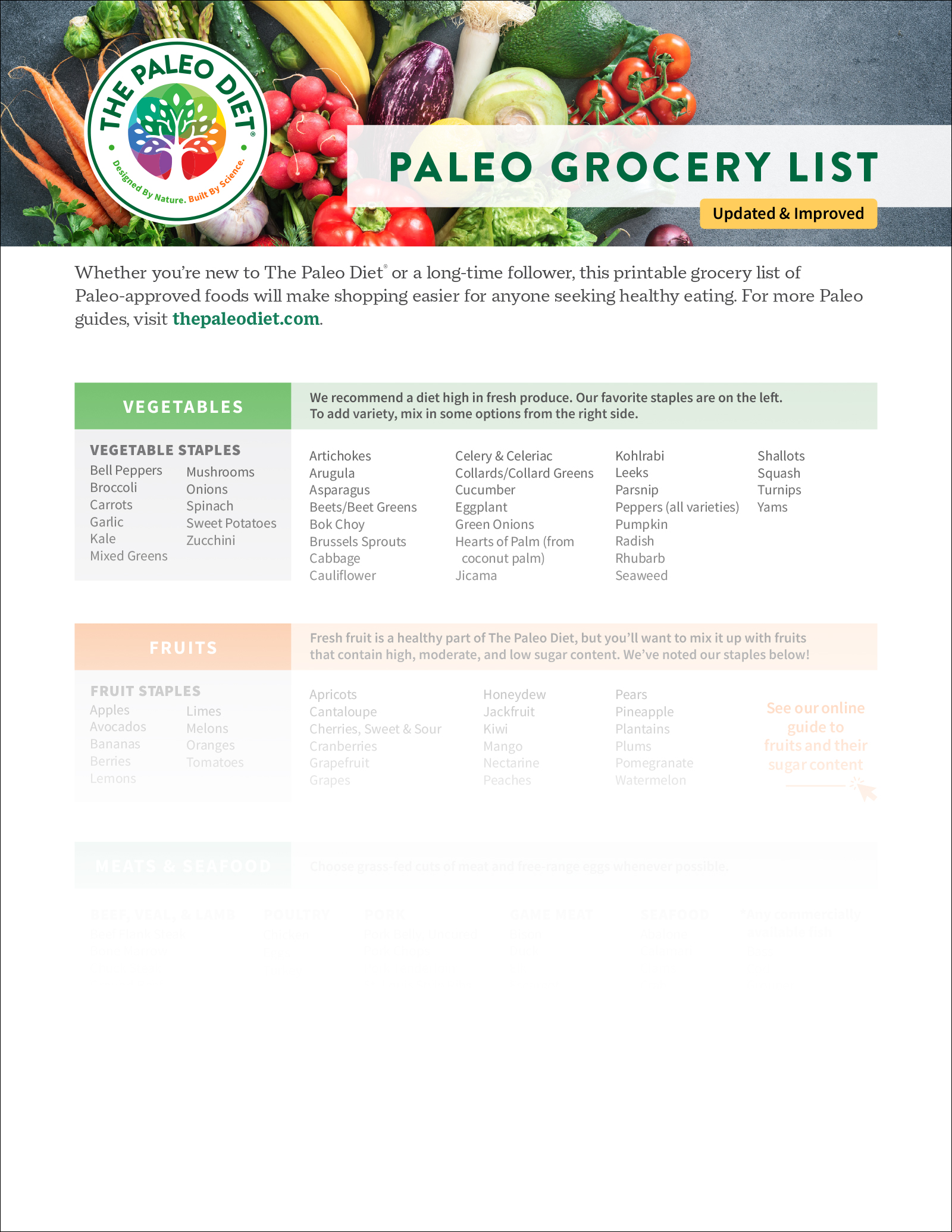
Sign up to get info on healthy nutrition, free recipes, meal prepping, and the latest health research. New subscribers will also receive our Official Paleo Grocery List!