Are Non-GMO Foods Healthier Than GMO Foods?

What You’ll Learn
This article explains what GMO foods are, what the science says about their safety, and why The Paleo Diet® prioritizes non-GMO foods as part of a whole-systems approach to nutrition.

If you’ve stood in a grocery aisle squinting at a label marked “Non-GMO Project Verified,” “USDA Organic,” or “Bioengineered,” you’ve likely wondered what any of it actually means and which option you should choose. For many people following The Paleo Diet®, the decision might feel intuitive: non-GMO is the way to go. But what exactly are GMOs—and are non-GMO foods truly better for you?
As GMOs have been part of the U.S. food supply for roughly three decades,¹ the answer deserves a deeper look.
What Are GMO Foods?
GMO is an acronym for “genetically modified organism”—specifically a plant, animal, or microorganism whose DNA has been changed using laboratory biotechnology.¹ Unlike traditional breeding, which selects desirable traits over generations, genetic engineering allows scientists to directly modify specific genes.
Most genetically engineered crops in the United States fall into two primary categories:
- Herbicide-tolerant (HT) crops, engineered to withstand specific herbicides, such as glyphosate.
- Insect-resistant (Bt) crops, engineered to produce proteins toxic to certain pests.
While most fresh fruits and vegetables in U.S. grocery stores are not genetically engineered, the majority of corn, soybeans, and sugar beets are grown using genetically engineered varieties.² These are then widely used in processed foods and conventional animal feed, making indirect exposure common in the standard American diet. In fact, Hans Eisenbeis of the Non-GMO Project notes that, historically, roughly 70% of packaged foods were estimated to contain GMO derivatives due to these commodity crops.
Since these ingredients are so common in American diets, many people want clearer information about them. So in 2018, the U.S. Department of Agriculture (USDA) implemented the National Bioengineered Food Disclosure Standard, requiring certain foods to disclose “bioengineered” ingredients.³ However, the concept of bioengineered food doesn’t always align with how consumers understand GMO. If a product is made from a genetically engineered crop but the final product contains no detectable modified DNA (for example, highly refined sugar from GMO sugar beets), it may not require a bioengineered disclosure even though many advocacy groups would still consider that a GMO-derived product.
As labeling standards continue to evolve, the information is muddled at best. Understanding what GMOs are and how they’re labeled (or not) naturally leads to the bigger question many consumers are asking.
Are GMO Foods Safe to Eat?
By current regulatory standards, approved GMO foods are considered safe, but that doesn’t tell the whole story. A 2016 report from the National Academies of Sciences concluded that genetically engineered crops currently on the market are not more risky to human health than conventionally bred crops4 and the World Health Organization similarly states that approved GMO foods available internationally have passed safety assessments and are not likely to present acute risks to human health.5
But regulatory reviews focus primarily on toxicity and allergenicity. They don’t evaluate long-term health effects or whether a crop fits into a farming system that promotes soil biodiversity, reduces chemical inputs, or aligns with a less industrial food model. For many people, this definition of safety isn’t a good answer to the question. They want to know what these standards of “safety” actually measure, and what they might miss.
The Farming Model Behind Most GMO Crops
Concerns about GMOs center on both the genetic modification itself and the agricultural systems in which these crops are grown. Many first-generation genetically engineered crops were designed to tolerate repeated herbicide applications.⁴ Over time, herbicide use, particularly glyphosate, has increased alongside the adoption of HT crops.6–8
Pesticide and Herbicide Exposure
Herbicide-tolerant crops allow for repeated spraying during the growing season. Although residue levels are regulated, some consumers prefer to minimize exposure whenever possible. Choosing non-GMO, especially when paired with organic certification, can reduce reliance on herbicide-intensive systems.
Monocropping and Soil Health
Large-scale GMO commodity crops are typically grown in monocultures—thousands of acres planted with a single crop year after year. Over time, monocropping combined with synthetic fertilizers and herbicides can reduce soil biodiversity.9,10
Soil health isn’t just an environmental buzzword. It determines how nutrients move through crops, how resilient plants are to stress, and how well ecosystems recover year after year.⁹ When microbial diversity in soil declines, that ripple effect can reach all the way to the food on our plates.
A 2016 systematic review comparing organic and conventional meat and dairy found differences in fatty acid composition, including higher omega-3 levels in organic products.¹¹ A U.S.-based study similarly reported higher omega-3 concentrations in organic milk.¹² These differences are linked to pasture access, biodiversity, and soil-centered farming methods, not genetic modification alone.
The Precautionary Principle
Some people also lean on the precautionary principle—the idea that when long-term scientific certainty is still evolving, minimizing potential exposure is a reasonable choice. These consumers question whether decades of cumulative exposure have been fully studied across generations. Others express concern about the pace of newer technologies such as gene editing and synthetic biology.
Public surveys also show an ongoing consumer desire for transparency in food labeling.¹³ As Eisenbeis notes, many shoppers say they want more control over what’s in their food, not just what food they buy.
GMO vs. Non-GMO vs. Organic: What’s the Difference?
The labels on a package can look similar, but they don’t mean the same thing.
- GMO refers to foods produced using genetic engineering—laboratory techniques that alter DNA directly.
- Non-GMO means the product was not made using genetic engineering. Programs such as Non-GMO Project Verified include supply chain review and, in many cases, testing protocols to confirm compliance. However, this does not mean that the food hasn’t been altered by traditional breeding.
- USDA Organic certification prohibits the use of GMOs and synthetic pesticides, and it also includes standards for soil health, livestock management, and ecological stewardship. However, organic certification is primarily process-based. It relies on approved sourcing and documentation rather than routine end-product testing for GMO presence.
- Bioengineered is the federal labeling term established under the USDA’s National Bioengineered Food Disclosure Standard.³ Though there is overlap with the concept of GMO, the terms are not identical, which can add to confusion in the marketplace.
So, Is Non-GMO Better For You?
Current scientific reviews have not found approved GMO crops to pose greater inherent health risks than conventional crops.⁴ But regulatory “safety” has a specific meaning: it evaluates acute toxicity, allergenicity, and compositional equivalence—not long-term ecological impact, soil health, agricultural inputs, or individual health risks over time. So the real question isn’t simply whether GMOs are safe. It’s what standard you’re using to define “better.”
For many Paleo followers, that standard extends beyond lab-based risk assessments to include how food is grown and the systems it supports. Choosing non-GMO foods can empower consumers to minimize herbicide exposure, support diversified farming systems, take a precautionary stance toward newer technologies, and eat in a way that is closer to nature.
How to Make an Informed Choice
If you’re looking for the healthiest food choice, consider these practical guidelines:
- Prioritize whole, minimally processed foods.
- Choose organic when possible to avoid GMOs and synthetic pesticides.
- Look for Non-GMO Project Verified labeling.
- Support regenerative, pasture-based, and biodiversity-focused farming systems.
- Focus on the overall dietary pattern rather than a single label.
GMO is part of a broader conversation about what kind of food system we want to support. For Paleo eaters, that question extends beyond the lab and into the soil, the farm, and the long-term health of the food itself.
References
- Food and Drug Administration. (2022). Science and history of GMOs and other food modification processes. https://www.fda.gov/food/agricultural-biotechnology/science-and-history-gmos-and-other-food-modification-processes
- United States Department of Agriculture, Economic Research Service. (2023). Adoption of genetically engineered crops in the U.S. https://www.ers.usda.gov/data-products/adoption-of-genetically-engineered-crops-in-the-united-states
- United States Department of Agriculture, Agricultural Marketing Service. (2018). National bioengineered food disclosure standard. https://www.ams.usda.gov/rules-regulations/be
- National Academies of Sciences, Engineering, and Medicine. (2016). Genetically engineered crops: Experiences and prospects. https://www.nationalacademies.org/projects/DELS-BANR-13-06/publication/23395
- World Health Organization. (2022). Food, genetically modified. https://www.who.int/news-room/questions-and-answers/item/food-genetically-modified
- Benbrook, C. M. (2016). Trends in glyphosate herbicide use in the United States and globally. Environmental Sciences Europe, 28(3). https://link.springer.com/article/10.1186/s12302-016-0070-0
- U.S. Environmental Protection Agency. (2020). Glyphosate interim registration review decision. https://www.epa.gov/ingredients-used-pesticide-products/glyphosate
- European Food Safety Authority. (2023). Glyphosate: EFSA’s assessment. https://www.efsa.europa.eu/en/topics/topic/glyphosate
- National Academies of Sciences, Engineering, and Medicine. (2024). Exploring linkages between soil health and human health. National Academies Press. https://landinstitute.org/wp-content/uploads/27459.pdf
- Lal, R. (2016). Soil health and carbon management. Food and Energy Security, 5(4), 212–222. https://onlinelibrary.wiley.com/doi/epdf/10.1002/fes3.96
- Średnicka-Tober, D., Barański, M., Seal, C., Sanderson, R., Benbrook, C., Steinshamn, H., et al. (2016). Composition differences between organic and conventional meat: A systematic literature review and meta-analysis. British Journal of Nutrition, 115(6), 994–1011. https://europepmc.org/article/PMC/4838835
- Benbrook, C. M., Davis, D. R., Heins, B. J., et al. (2013). Organic production enhances milk nutritional quality by shifting fatty acid composition: A United States–wide, 18-month study. PLoS ONE, 8(12), e82429. https://journals.plos.org/plosone/article?id=10.1371/journal.pone.0082429
- Pew Research Center. (2016, December 1). The new food fights: U.S. public divides over food science. https://www.pewresearch.org/science/2016/12/01/the-new-food-fights/
Tiffany Nieslanik
Tiffany is a freelance writer covering health and wellness, parenting, lifestyle, and consumer technology. With a passion for research-backed storytelling and a personal interest in food as medicine, she brings a thoughtful approach to writing about wellness and nutrition.
More About The Author
Grocery Shopping




The Paleo Diet® Newsletter
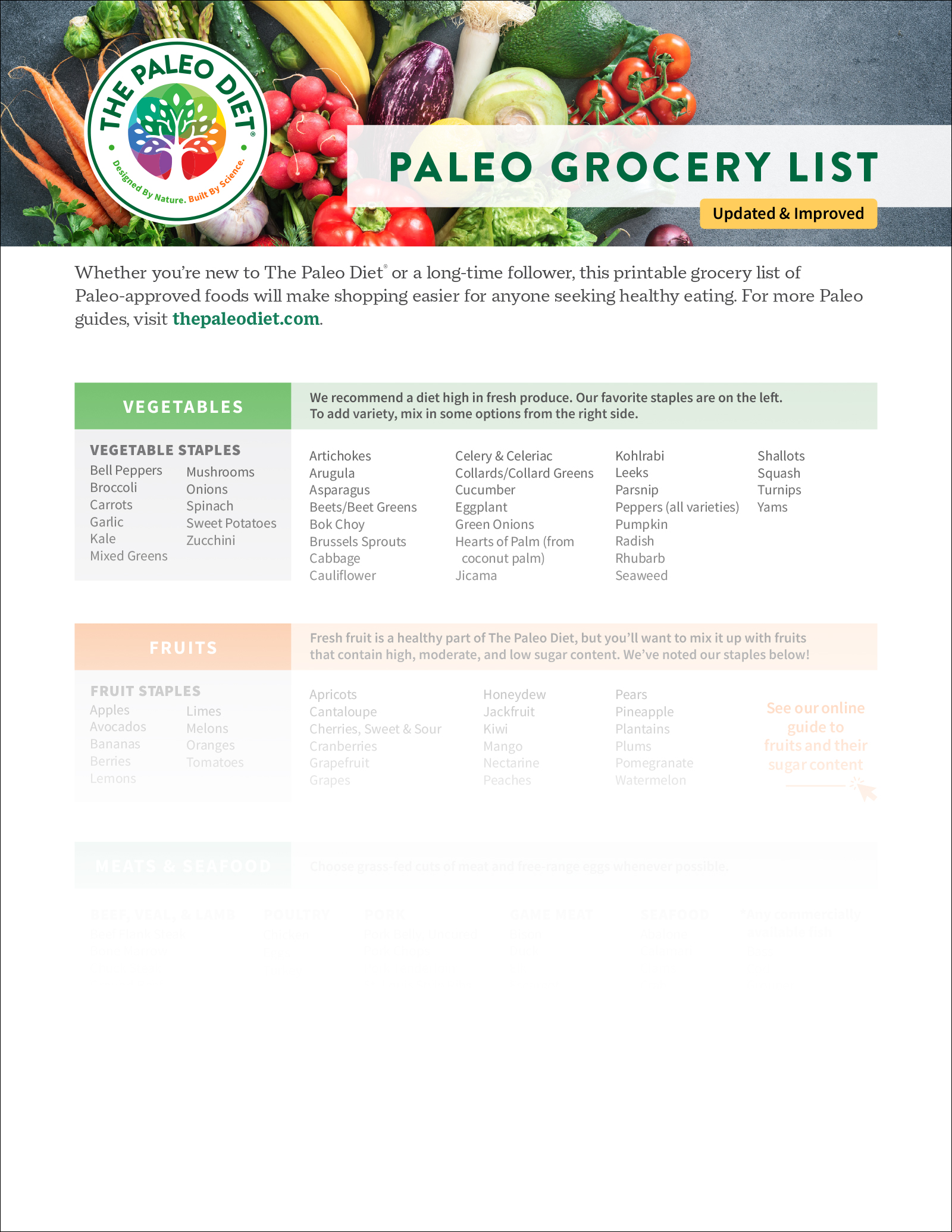
Sign up to get info on healthy nutrition, free recipes, meal prepping, and the latest health research. New subscribers will also receive our Official Paleo Grocery List!
