The Importance of Proper Kitchen Ventilation When Cooking
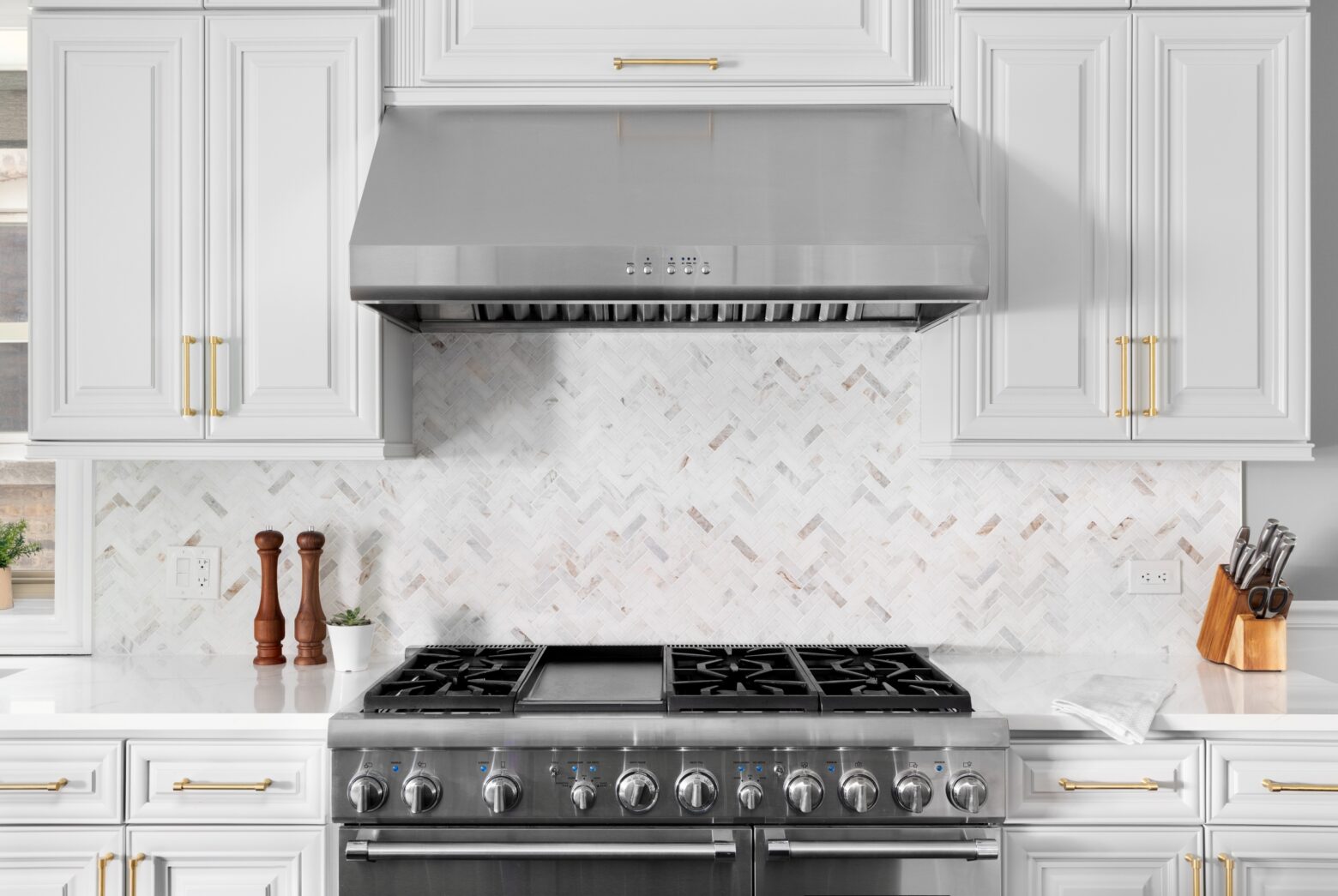
For generations, millions of home cooks have valued gas stoves for instant heat, temperature control, and their ability to respond quickly when a sauce threatens to boil over. Yet like fireplaces, furnaces, and other fuel-burning appliances, gas ranges release combustion products such as nitrogen dioxide (NO2), carbon monoxide (CO), and fine particulates into the air.
Does that mean you should replace your gas stove? While not every meal prepared over gas flames presents an immediate health risk, it’s important to understand what gas stoves emit, who may be most vulnerable, and how good kitchen ventilation can reduce exposure.

In a 2025 review, the U.S. Government Accountability Office (GAO) described gas-stove emissions as a legitimate health and safety concern.1 Since then, there has been substantial scientific debate from consumer protection groups, the restaurant industry, American Gas Association, and the Environmental Protection Agency (EPA) on how strongly ordinary exposure can be connected to chronic health problems when health history, outdoor pollution, tobacco smoke, housing conditions, and other variables may also be involved.2
The most sensible response lies between panic and dismissal: recognize the potential risks, maintain the appliance, and send cooking emissions outdoors whenever possible. Induction and conventional electric stoves eliminate combustion emissions at the cooking surface. However, they do not eliminate other types of indoor air pollution from frying, searing or burning food, and spills left in the bottom of the oven, so kitchen ventilation remains important no matter which energy source heats the pan.
What Comes Off the Stove?
Burning natural gas or propane can produce NO2, CO, carbon dioxide (CO2), particulate matter, and smaller quantities of methane, benzene and other compounds. A properly functioning gas stove ordinarily does not produce hazardous amounts of these compounds, but a malfunctioning or improperly used stove can allow dangerous levels to accumulate, especially in a small or poorly ventilated spaces.
- Nitrogen dioxide is one of the primary concerns associated with gas combustion. It can irritate the eyes, nose, throat and respiratory system. According to the EPA, children and individuals with asthma or other respiratory diseases are at particular risk from exposure to NO2.3
- Carbon monoxide is colorless and odorless and can cause sudden illness or death at high concentrations. Even lower-level exposure over an extended period can cause health problems.
- Cooking methods and certain foods can affect emissions, regardless of whether one cooks with gas, electric, or induction. The amount of particulate matter depends on the food, cooking temperature, type of oils, and cooking methods. For instance, broiling or indoor grilling fatty meats releases air-polluting volatile organic compounds. When oils approach or exceed their smoke point, they emit harmful microscopic droplets and vapors whether pan frying, stir-frying, or deep-fat frying.
RELATED: Is Grilled Food Healthy?
Is Everyone Equally at Risk?
Not everyone responds to pollutants in the same way. Children breathe more air relative to their body size than adults and their lungs are still developing. People with asthma may react more strongly to respiratory irritants. In general, infants, older adults, people with asthma, and those with heart or respiratory disease are potentially more sensitive to indoor and outdoor air pollutants, according to government data.2
Exposure also varies from household to household. A person who cooks in a large kitchen with a proper kitchen exhaust fan may have a very different exposure from someone who prepares meals in a small space with no outdoor exhaust. The number of burners used, cooking temperature, ventilation rate, appliance condition, and length of cooking time all make a difference.
The Most Important Appliance Is Above the Stove
Not all kitchen hood vents work the same way. A ducted hood moves polluted air outside. A less effective recirculating hood pulls air through a filter and returns it to the kitchen after collecting grease and some particles. “Effective ventilation is a really good way to minimize exposure versus converting to another cooking source,” says Vince M. Daliessio, Jr., CIH, a certified industrial hygienist and founder of Mercury Environmental consulting.
When Daliessio built his most recent home, his gas range vented into a recirculating fan and grease trap under the microwave, so he added an outdoor venting system to free the air to the outside. “Take whatever you spent on the stove and double it for the ventilation to make sure it’s effective,” he says.
In kitchens without an outdoor-venting kitchen exhaust fan, or for individuals who don’t turn it on, there is a 25% greater exposure rate than average, according to a 2024 Science Advances study.4 The EPA recommends that for cooktops without outdoor ventilation, cover pans with lids, place portable air cleaners nearby with activated carbon or HEPA filters, open windows, and place an exhaust fan pointing outward on the sill.
RELATED: How to Protect Yourself Against Indoor Air Pollution
Kitchen hood vents have a capture efficiency assigned to them. This is the percentage of pollutants intercepted by the hood and sent outdoors before spreading into a room. Under test conditions, a hood with 70% capture efficiency removes roughly seven-tenths of the emissions generated at the stove.
“Though it does not necessarily reduce the entire room or the household’s total exposure by exactly 70%,” emphasizes Daliessio. “The capture efficiency is only for the individual cooking closest to the stove.” Exposure for the person cooking depends on cooking frequency, hood size, background pollution, and how long the occupants remain in the kitchen.
A properly installed, outdoor-venting range hood can commonly capture about 50% to 70% of cooking and burner pollutants. Higher-performing hoods can capture 80% to more than 90%, but performance varies greatly. A Berkeley Lab testing of residential hoods found capture efficiencies range from less than 15% to more than 98%, depending on hood design, airflow setting, and burner position.4 Here is an important tip: Cooking on a back burner with the fan on increases the capture percentage.5
For light cooking (like sautéing) low to medium fan speeds are sufficient. For frying or high-heat wok cooking, use the highest speeds possible. Leave the fan on for 10 to 20 minutes after cooking has ended.4 All too often, the range hood is used to clear smoke or odors after something burns. For indoor air quality, it’s best when used before the pan and kitchen becomes smoky.
Other factors include filters and noise.A grease-coated filter restricts airflow and reduces the hood’s effectiveness—clean or replace it, according to the manufacturer’s directions. Cooks are hesitant to use higher hood ventilation speeds because the powerful fan sounds as if an aircraft is taking off in the kitchen. When replacing a hood, consider its noise rating, airflow, and whether it adequately covers the cooking surface area from above.
Maintenance and Emission Detection Matter
Since the GAO report, appliance manufacturers and standards organizations have improved ignition systems, automatic gas shutoffs, and CO safeguards, and better tests for stove and kitchen exhaust fan performance. The kitchen ventilation industry is also moving toward capture-efficiency ratings, quieter fans, and hoods that activate automatically.
However, US standards do not yet provide health-based emission limits for NO2 and pollutants other than CO, leaving an important area for continued research and product development.7,8,9 Below are a few tips for maintaining a gas stove and keeping your exposure to harmful emissions low.
- A gas stove should ignite promptly and burn with a steady blue flame. A persistent, yellow-tipped flame can signal improper adjustment and increased pollutant production.
- Watch for delayed ignition, soot, recurring gas odors, damaged controls, or flames that go out. Don’t assume it’s harmless, call a repair person.
- Keep burner ports clean and free of food residue.
- Check the Consumer Product Safety Commission’s recall database. The GAO reported that approximately 60,000 gas stoves were recalled in 2022 and 2023 because they could emit dangerous levels of carbon monoxide.6
- Every home with a fuel-burning appliance should also have working carbon-monoxide alarms near sleeping areas and throughout the house. Use the type with a digital number that reads the actual CO detection level instead of a range. Check the batteries regularly and replace the detector (usually every five years), according to the manufacturer’s instructions.
- A CO detector is not a substitute for kitchen ventilation. If an alarm sounds, move to fresh air and call 911 rather than search the home for the source.
- Never use a gas oven to heat the house. Stoves are cooking appliances, not heating systems. Operating an oven for warmth can allow CO to accumulate.
A Practical Kitchen Ventilation Checklist
Whether or not you have a gas stove, the following is a series of steps to follow when cooking on a kitchen range.
- Turn on the kitchen exhaust fan whenever using the stove or oven.
- Use a hood that vents outdoors whenever possible.
- Begin kitchen ventilation before cooking and continue for 10 to 20 minutes after finishing.
- Cook on the back burners when practical and cover pans with lids.
- Clean or replace kitchen hood vent filters regularly.
- Keep burner openings and the oven free of accumulated grease and food.
- Have yellow flames, soot, delayed ignition, or unusual odors professionally evaluated.
- Install and maintain carbon-monoxide alarms near sleeping areas.
- Open a window and use another outdoor-venting fan when recirculating hoods are the only option.
- Avoid cooking with unnecessarily high heat and do not char food indoors.
- Consider induction or electric cooking when the existing appliance reaches the end of its useful life.
References
- U.S. Government Accountability Office. Gas Stoves: Risks and Safety Standards Related to Products and Ventilation. Report GAO-25-107514. Published March 14, 2025. Accessed July 31, 2026. https://www.gao.gov/assets/880/876258.pdf
- American Gas Association. Cooking with gas: indoor air quality and residential gas ranges and stoves. Accessed August 3, 2026. https://www.aga.org/research-policy/resource-library/cooking-with-gas-indoor-air-quality-and-residential-gas-ranges/
- US Environmental Protection Agency. Sources of combustion products. Updated December 17, 2025. Accessed August 3, 2026. https://www.epa.gov/indoor-air-quality-iaq/sources-combustion-products
- Kashtan Y, Nicholson M, Finnegan CJ, et al. Nitrogen dioxide exposure, health outcomes, and associated demographic disparities due to gas and propane combustion by US stoves. Sci Adv. 2024;10(18):eadm8680. doi:10.1126/sciadv.adm8680.
- Walker IS, Rojas G, Clark JD, Sherman MH. Evaluating the performance of island kitchen range hoods. Presented at: AIVC Conference 2017; September 2017. doi:10.20357/B75P4X.
- US Government Accountability Office. Gas Stoves: Risks and Safety Standards Related to Products and Ventilation. GAO-25-107514. Published March 18, 2025. Accessed August 3, 2026. https://www.gao.gov/assets/gao-25-107514.pdf
- CSA Group, American National Standards Institute. ANSI Z21.1/CSA 1.1: Household Cooking Gas Appliances. CSA Group; 2024.
- 8. ASTM International. ASTM E3087-18(2026): Standard Test Method for Measuring Capture Efficiency of Domestic Range Hoods. ASTM International; 2026. doi:10.1520/E3087-18R26.
- 9. US Department of Energy. Development of a smart range hood. Accessed August 3, 2026. https://www.energy.gov/cmei/buildings/development-smart-range-hood
Kimberly Lord Stewart
Kimberly Lord Stewart is an author, journalist, and culinary expert. Her work highlights the importance of incorporating whole foods into daily diets and emphasizes the connection between food and overall well-being.
More About The Author
Cooking

The Paleo Diet® Newsletter
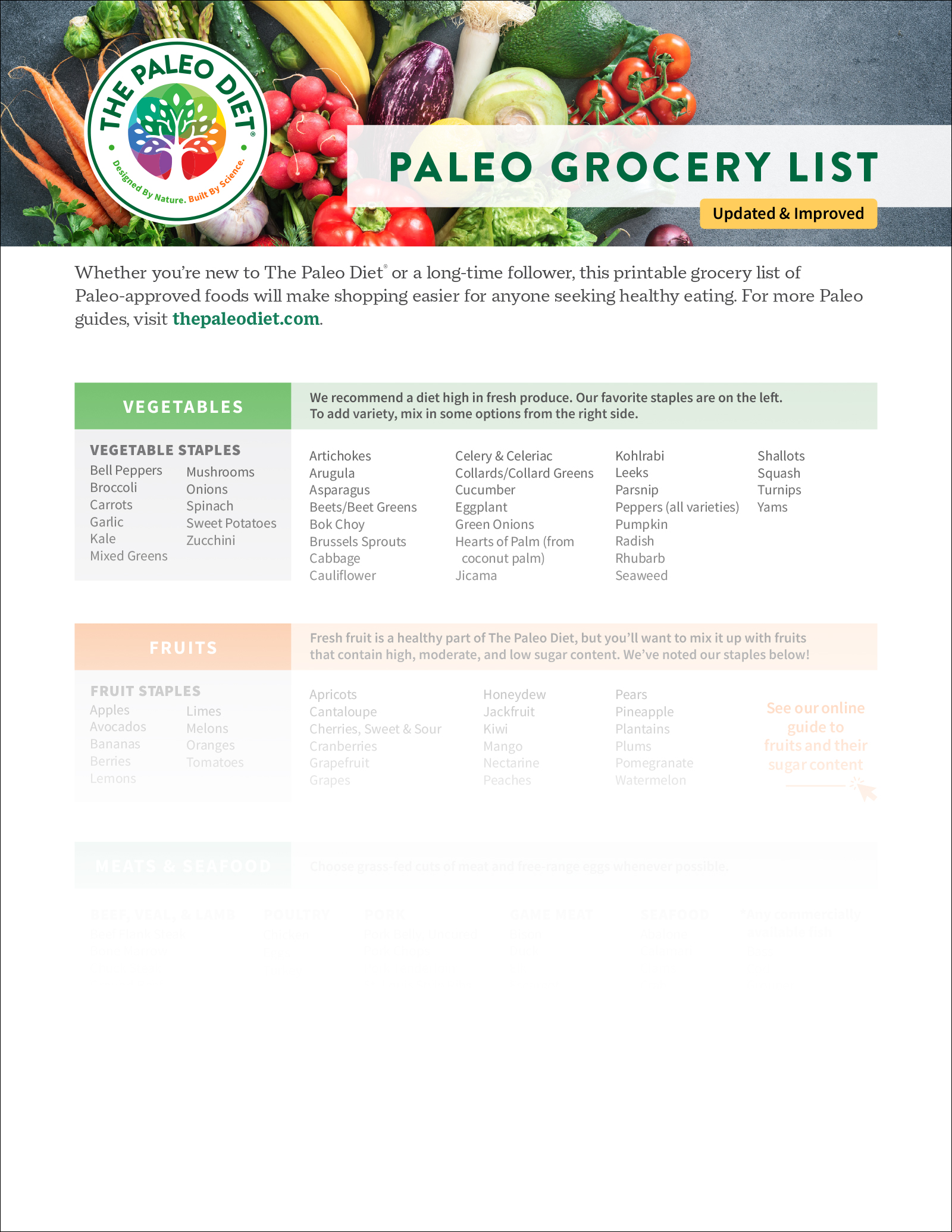
Sign up to get info on healthy nutrition, free recipes, meal prepping, and the latest health research. New subscribers will also receive our Official Paleo Grocery List!
