Is Saturated Fat Good or Bad? Revisiting the Paleo Position
About 125,000 years ago, beside a lake in what is now Germany, Neanderthals were crushing bones from large mammals into fragments, processing them to extract their fat. Archaeologists studying the Neumark-Nord site say in operated as a “fat factory,” citing evidence of organized bone-grease extraction. This discovery shows these hominins highly valued animal fat.1 However, an important question for modern Paleo eaters remains unanswered: how much fat, specifically saturated fat, should we be eating today?
The American Heart Association recommends keeping saturated fat below 6% of daily calories.2 In his 2011 book, The Paleo Answer, Dr. Loren Cordain recommends 10 to 15%, arguing this optimal range should not increase heart-disease risk when combined with the diet’s other principles.3 But has anything changed in the years since Dr. Cordain’s book was published? Should we modify our views on saturated fat?

Why Dr. Cordain Questioned the Guidelines
In The Paleo Answer, Dr. Cordain cited evidence while questioning conventional advice on saturated fat.3 For example, he highlighted a 2010 analysis of 21 prospective studies involving nearly 348,000 people, which found no statistically significant association between higher saturated-fat intake and coronary heart disease, stroke, or combined cardiovascular disease.4 Eating less saturated fat, however, raises a question this study did not resolve: What are people eating in place of the saturated fat?
RELATED: Why We Shouldn’t Exclude Fat from Our Diets
A second 2010 review examined what happened when other nutrients replaced saturated fat. Replacing saturated fat with carbohydrate offered no clear cardiovascular benefit, especially when the replacement was refined carbohydrate. Replacing it with polyunsaturated fat, on the other hand, showed more favorable results.5
In observational research, associations between saturated-fat intake and heart disease differ according to the food source.6 Moreover, other foods in the diet, eating habits, and lifestyle differences can also explain these associations. Saturated fat content alone may therefore be a poor indicator of a food’s cardiovascular effects.
What LDL Cholesterol Can and Cannot Show
Cholesterol helps build cell membranes and produce certain hormones. Because it cannot dissolve in blood, it travels inside particles called lipoproteins. Low-density lipoprotein (LDL) is one type of carrier. LDL-C measures the amount of cholesterol carried by LDL particles in the blood.
Think of cholesterol as cargo and lipoproteins as the vehicles transporting it. LDL-C measures the cargo across all LDL vehicles. ApoB, short for apolipoprotein B, is a protein on LDL and certain other lipoprotein particles that can contribute to arterial plaque. Each of these particles carries one ApoB molecule, so ApoB is like a measurement of the number of vehicles, regardless of the cargo load.
The same amount of cholesterol can travel in fewer heavily loaded vehicles or more lightly loaded ones. For the same LDL-C, higher ApoB generally signals greater cardiovascular risk: more particles are circulating that can enter and become trapped in artery walls.7
Saturated fat can increase that particle count compared with unsaturated fat. A 2022 review of controlled feeding trials found that replacing palmitic acid, a saturated fatty acid, with oleic acid, the main monounsaturated fatty acid in olive oil, lowered both LDL-C and ApoB.8 This substitution reduced both the cholesterol cargo and the number of vehicles.
Finally, a shift toward larger LDL particles does not necessarily offset an increase in particle number. Although larger LDL particles are often described as less dangerous than smaller ones, a 2025 study of approximately 207,000 people found that size generally added little information about coronary risk once researchers accounted for particle number.9 Larger LDL particles therefore offer little reassurance when ApoB is elevated.
Does Reducing Saturated Fat Prevent Heart Attacks?
A 2020 Cochrane review found that reducing saturated fat lowered combined cardiovascular events, although it had little effect on mortality.10 Later reviews have reached differing conclusions, partly because they included different trials and assessed different outcomes.
In 2025, researchers analyzing nine trials involving 13,532 participants found no statistically significant reductions in mortality or coronary outcomes and concluded that the evidence did not justify recommending saturated fat restriction.11 The review did not exclude a possible reduction in heart attacks.
A broader review from 2026 included 17 trials involving 66,337 participants. The authors estimated small absolute benefits for saturated fat reduction over five years for people at low cardiovascular risk and potentially meaningful benefits for those at higher risk.12 In trials replacing saturated fat with polyunsaturated fat, nonfatal heart attacks were an estimated 25% lower in relative terms. The evidence was of low to moderate certainty.
Therefore, the same percentage reduction can have very different consequences depending on someone’s starting risk. A 25% relative reduction would lower a 1% risk to 0.75%, but a 10% risk to 7.5%. These figures illustrate relative and absolute risk; they are not the review’s observed event rates. A five-year assessment also cannot establish the effects of a lifelong diet.
An October 2026 narrative synthesis examining 31 publications containing 32 systematic reviews and meta-analyses found no consistent association between saturated fat intake and cardiovascular events or mortality.13 Its authors nevertheless acknowledged evidence favoring replacement with polyunsaturated fat. They argued that “recommendations on SFA intake may be more effective when considered within the broader context of dietary patterns rather than replacement of single nutrients.” That approach supports Dr. Cordain’s emphasis on the overall diet, although the review did not establish an optimal saturated fat intake.
RELATED: How Much Linoleic Acid Do You Need?
What Happens When the Whole Diet Changes?
A 2022 controlled feeding trial examined how diets with different carbohydrate and fat proportions affected cardiovascular markers.14 After losing weight, 164 adults were randomly assigned to three diets for 20 weeks. The lowest-carbohydrate diet supplied 21% of calories as saturated fat; the highest-carbohydrate diet supplied 7%. The lowest-carbohydrate diet lowered triglycerides and raised HDL cholesterol; there were no statistically significant between-group differences regarding LDL cholesterol or LDL particle concentration.
A 2021 feeding trial produced a less reassuring response. Among 17 women completing a ketogenic diet experiment, LDL cholesterol rose in every participant, and ApoB also increased.15 The populations and diets differed between the studies, preventing a direct comparison. But the second trial demonstrates that carbohydrate restriction does not reliably prevent an adverse cholesterol response. A person can follow a low-carbohydrate diet and still need to consider its fat composition.
What Should Paleo Eaters Do?
The evidence supports evaluating saturated fat in the context of its food sources and the nutrients that replace it. The overall dietary pattern matters, as does a person’s cardiovascular risk. People at higher risk may gain more in absolute terms from replacing saturated fat with unsaturated fat.
Paleo eaters can preserve the diet’s emphasis on minimally processed foods while choosing more unsaturated fat from olive oil, nuts, and fish. There is no need to deliberately increase saturated fat, and a substantial rise in LDL-C or ApoB warrants attention even when weight or blood sugar improves.
The Neumark-Nord discoveries show us that animal fat has long been a valuable resource. They cannot, however, tell us how much saturated fat we should be eating today. Ancient dietary practices offer useful context, but contemporary dietary decisions should consider individual cardiovascular risk, including LDL-C and ApoB levels and how they respond to dietary changes.
References
- Kindler L, Gaudzinski-Windheuser S, Scherjon F, Garcia-Moreno A, Smith GM, Pop E, Speth JD, Roebroeks W. Large-scale processing of within-bone nutrients by Neanderthals, 125,000 years ago. Science Advances. 2025;11(27):eadv1257. doi:10.1126/sciadv.adv1257
- American Heart Association. Saturated Fats. Last reviewed August 23, 2024. Retrieved from https://www.heart.org/en/healthy-living/healthy-eating/eat-smart/fats/saturated-fats
- Cordain L. The Paleo Answer: 7 Days to Lose Weight, Feel Great, Stay Young. Hoboken, NJ: John Wiley & Sons; 2011.
- Siri-Tarino PW, Sun Q, Hu FB, Krauss RM. Meta-analysis of prospective cohort studies evaluating the association of saturated fat with cardiovascular disease. American Journal of Clinical Nutrition. 2010;91(3):535-546. doi:10.3945/ajcn.2009.27725
- Micha R, Mozaffarian D. Saturated fat and cardiometabolic risk factors, coronary heart disease, stroke, and diabetes: a fresh look at the evidence. Lipids. 2010;45(10):893-905. doi:10.1007/s11745-010-3393-4
- Steur M et al. Dietary fatty acids, macronutrient substitutions, food sources and incidence of coronary heart disease: findings from the EPIC-CVD case-cohort study across nine European countries. Journal of the American Heart Association. 2021;10(23):e019814. doi:10.1161/JAHA.120.019814
- Sniderman AD, Dufresne L, Pencina KM, Bilgic S, Thanassoulis G, Pencina MJ. Discordance among apoB, non-high-density lipoprotein cholesterol, and triglycerides: implications for cardiovascular prevention. European Heart Journal. 2024;45(27):2410-2418. doi:10.1093/eurheartj/ehae258
- Sellem L, Flourakis M, Jackson KG, Joris PJ, Lumley J, Lohner S, Mensink RP, Soedamah-Muthu SS, Lovegrove JA. Impact of replacement of individual dietary SFAs on circulating lipids and other biomarkers of cardiometabolic health: a systematic review and meta-analysis of randomized controlled trials in humans. Advances in Nutrition. 2022;13(4):1200-1225. doi:10.1093/advances/nmab143
- Morze J et al. ApoB-containing lipoproteins: count, type, size, and risk of coronary artery disease. European Heart Journal. 2025;46(27):2691-2701. doi:10.1093/eurheartj/ehaf207
- Hooper L, Martin N, Jimoh OF, Kirk C, Foster E, Abdelhamid AS. Reduction in saturated fat intake for cardiovascular disease. Cochrane Database of Systematic Reviews. 2020;(8):CD011737. doi:10.1002/14651858.CD011737.pub3
- Yamada S, Shirai T, Inaba S, Inoue G, Torigoe M, Fukuyama N. Saturated fat restriction for cardiovascular disease prevention: a systematic review and meta-analysis of randomized controlled trials. JMA Journal. 2025;8(2):395-407. doi:10.31662/jmaj.2024-0324
- Steen JP et al. Effect of interventions aimed at reducing or modifying saturated fat intake on cholesterol, mortality, and major cardiovascular events: a risk stratified systematic review of randomized trials. Annals of Internal Medicine. 2026;179(2):242-255. doi:10.7326/ANNALS-25-02229
- Mansfeldt JM et al. Revisiting the evidence underlying dietary recommendations on saturated fats and cardiovascular disease: a narrative synthesis of systematic reviews and meta-analyses. Advances in Nutrition. 2026:100746. Published online October 7, 2026. doi:10.1016/j.advnut.2026.100746
- Ebbeling CB, Knapp A, Johnson A, Wong JMW, Greco KF, Ma C, Mora S, Ludwig DS. Effects of a low-carbohydrate diet on insulin-resistant dyslipoproteinemia—a randomized controlled feeding trial. American Journal of Clinical Nutrition. 2022;115(1):154-162. doi:10.1093/ajcn/nqab287
- Burén J, Ericsson M, Damasceno NRT, Sjödin A. A ketogenic low-carbohydrate high-fat diet increases LDL cholesterol in healthy, young, normal-weight women: a randomized controlled feeding trial. Nutrients. 2021;13(3):814. doi:10.3390/nu13030814
Chris Clark
Christopher Clark is an entrepreneur, food writer, and business owner with years of experience with nutrition.
More About The Author
Heart Health



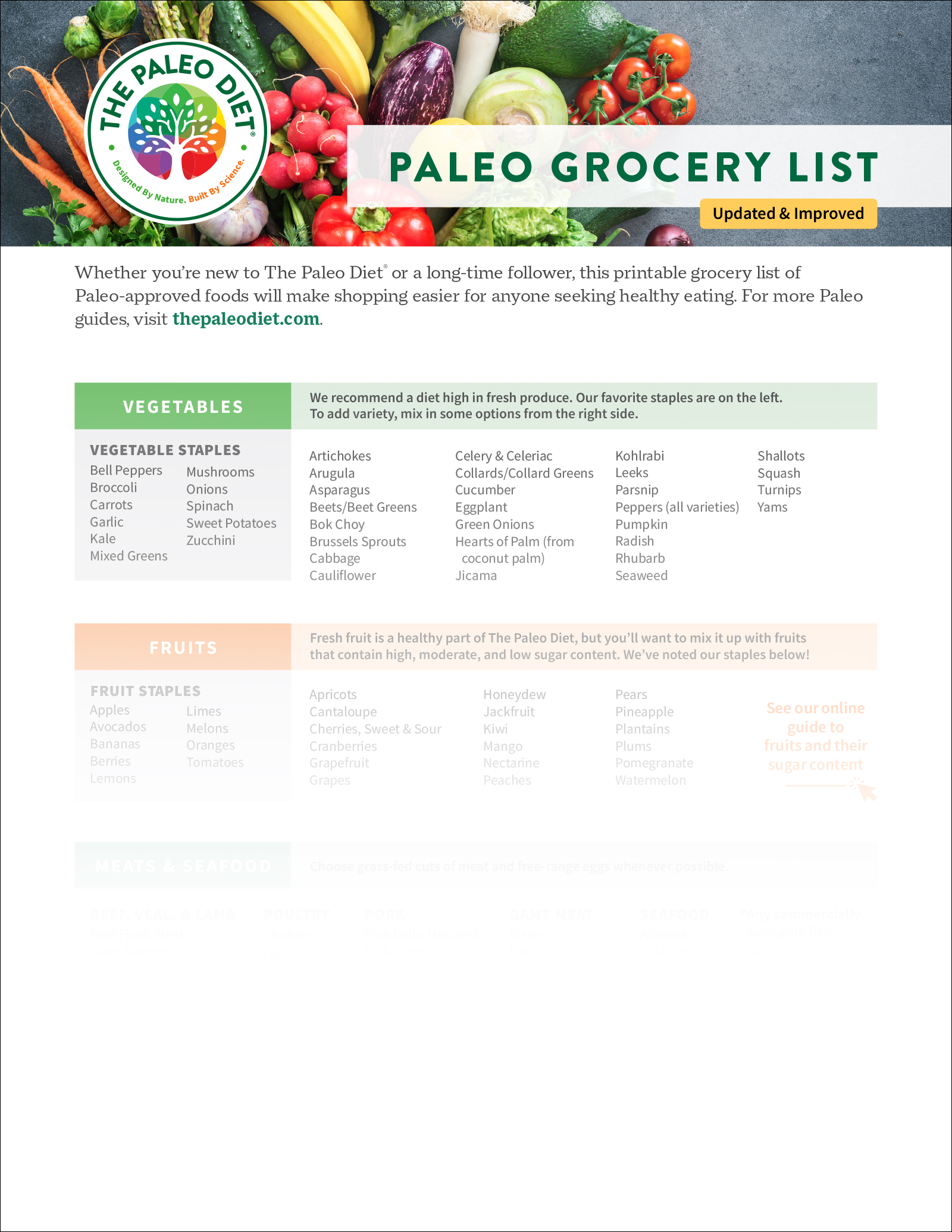
The Paleo Diet® Newsletter
Sign up to get info on healthy nutrition, free recipes, meal prepping, and the latest health research. New subscribers will also receive our Official Paleo Grocery List!
