How to Stop Sugar Cravings with The Paleo Diet®

We all know from experience that eating foods high in sugar can be a slippery slope: The more you eat, the more you want. Research suggests that highly palatable, sugar-rich foods can influence the brain’s reward pathways and, depending on the type and amount consumed, may also affect cravings and satiety. But do you have to give up every form of sugar to break the pattern? Not necessarily. Moving away from refined and ultraprocessed sweeteners and toward whole fruits and more natural sweeteners can be a very helpful first step.
What Is Considered Sugar?
Sugar encompasses more than the traditional white and brown sugars found in the baking aisle. In nutrition science, sugars are simple carbohydrates, including sucrose, fructose, and glucose. These terms describe the molecules’ chemical structure. Sucrose—the sugar commonly known as table sugar—is made up of roughly equal amounts of glucose and fructose.1

Sugars occur naturally in many whole foods, including fruits, vegetables, maple syrup, and honey. They can also be extracted, refined, concentrated, or added to foods and beverages. For example, food manufacturers often get sucrose from sugarcane or sugar beets and fructose from corn or agave.
The source and form of sugar matter. Whole fruit, for example, doesn’t just contain fructose and other sugars. It comes packaged with water, fiber, vitamins, minerals, and other beneficial plant compounds. Refined sugar, by contrast, provides concentrated calories with very little nutritional value.
Why Does Sugar Lead to Cravings?
Several factors can contribute to sugar cravings. First, sugar activates brain pathways involved in pleasure, motivation, and appetite. Sensory signals from the mouth and nutrient signals from the digestive tract help shape these responses, which can encourage us to keep eating sweets when we’re no longer hungry.2
The type of sugar makes a difference. Although glucose and fructose are both simple sugars, the body processes them differently. Glucose serves as an essential energy source for cells throughout the body. It stimulates insulin release, supports glycogen storage, and can be used to generate ATP, the energy source of the cells.
Fructose, on the other hand, is metabolized primarily by the liver. Researchers have investigated whether fructose affects hunger and satiety differently from glucose, particularly when consumed in large amounts or in sugar-sweetened beverages.3,4
While table sugar is approximately 50% glucose and 50% fructose, high-fructose corn syrup (HFCS) often contains more fructose than glucose—anywhere from 55% to 90% fructose.5 That’s why highly processed foods rich in HFCS can be more addictive than homemade treats using traditional sweeteners.
Rapidly digested carbohydrates (simple sugars) can also raise blood glucose, prompting insulin release to transport the glucose into the body’s tissues. Depending on the meal, portion size, and individual response, subsequent blood glucose changes may contribute to hunger, fatigue, or cravings for sweets.6
Cravings aren’t always driven by physical hunger. If you regularly reach for chocolate when stressed, for example, your brain may begin associating chocolate with comfort or relief. Eventually, stress itself may trigger the desire for a chocolate fix.
How Can a High-Sugar Diet Affect Health?
Frequently consuming foods and beverages high in sugar can make it harder to maintain a healthy diet. These products often provide substantial calories without the fiber and nutrients found in whole foods.
Excessive intake can contribute to weight gain, dental cavities, and chronic health conditions, including diabetes, heart disease, cancer, autoimmune disease, and neurodegenerative disease.7
Research has also linked higher sugar intake with poorer mental health outcomes, including symptoms of anxiety and depression. However, these relationships are complex, and not every study establishes a direct cause-and-effect relationship.8,9
The goal when learning how to stop sugar cravings isn’t to avoid or fear every gram of sugar. It’s to reduce added sugar while prioritizing nutrient-dense foods that support overall health.
Paleo-Friendly Sweeteners to Consider
Following The Paleo Diet doesn’t mean never baking again. If you’re transitioning away from refined sweeteners, there are several more natural options to consider—though keep in mind that natural doesn’t automatically mean metabolically superior. Some sweeteners provide small amounts of additional nutrients while others offer sweetness with little to no sugar. Which ones you use will depend on the product and your dietary goals.
For Paleo standards, the only true allowable sweeteners are dates, fruit and vegetable juices, and raw honey. All others are healthier options that can be included in a Paleo diet once in a while, but are best not to consume frequently.
Dates
Dates offer a whole-food alternative to refined sweeteners. In addition to naturally occurring sugars, they provide minerals, antioxidants, and vitamin B6.
Whole dates also have fiber, which helps to slow absorption into the bloodstream.10 So, a date isn’t simply “sugar” to the body. It’s a whole fruit that’s rich in sugars.
Date syrup, however, is different. Although it retains some nutrients, processing removes much of the original fruit structure and may reduce its fiber content. It’s much closer to a concentrated sweetener than a serving of whole fruit.
Fruit and Vegetable Juices
Juicing has been a health trend for a long time now, and fresh-squeezed juices are a great option to add sweetness and flavor to a recipe. However, because a fruit or vegetable can lose a lot of its fiber and nutrients when it’s passed through a juicer, we recommend against relying on juices to reach your health goals.
Honey
Honey is the original high-in-fructose sweetener with side benefits. Honey has small amounts of enzymes, polyphenols, and other bioactive compounds. Research has also documented antimicrobial properties, with some types of honey receiving particular attention for their potential.11
Raw honey or specialty varieties such as Manuka may contain additional bioactive compounds, but their composition varies. Honey is still a concentrated source of sugar and should be used in moderation.12
Maple Syrup
Maple syrup is made by concentrating the sap of maple trees. Its familiar flavor works well for Paleo pancakes, homemade dressings, marinades, and glazes.
Although maple syrup is still a concentrated sweetener, it has some advantages over refined white sugar. It has a lower glycemic index than table sugar, and it retains small amounts of minerals like manganese, zinc, calcium, and potassium.
A 2024 randomized crossover trial involving 42 overweight adults found that replacing refined sugar with maple syrup for eight weeks was associated with differences in glucose response, systolic blood pressure, and abdominal fat mass.13
Yacon Syrup
Yacon syrup is made by concentrating the juice from the roots of a South American plant. It contains fructooligosaccharides (FOS) and other fructans, carbohydrates that resist digestion in the small intestine.
These compounds can reach the colon, where gut microbes ferment them. As a result, they can act as prebiotics, providing a food source for certain beneficial gut bacteria.14
Unlike conventional sugars, FOS isn’t fully digested and absorbed in the gut. However, its fermentability can cause gas, bloating, or digestive discomfort in some people.
Monk Fruit
Monk fruit, also known as luo han guo, is a Chinese plant in the gourd family. Its sweetness comes primarily from compounds called mogrosides rather than conventional sugars.15
Monk fruit extracts can provide intense sweetness with very little sugar or carbohydrate, depending on the individual product. They may be useful when the goal is to reduce added sugar. However, some commercial blends contain other sweeteners or bulking ingredients. So always check the ingredients list first.
Stevia
Stevia is a plant whose leaves contain intensely sweet compounds called steviol glycosides. The leaves can be dried and crushed for use in smoothies, teas, or other recipes. Purified stevia extracts are also widely available.
Because steviol glycosides contribute little or no calories and have minimal effects on blood sugar, stevia can be a good alternative to sugar when the goal is to reduce all added sugar intake.16
The Ultimate Goal: Minimizing All Sweeteners
The ideal outcome isn’t to replace refined sugar with larger quantities of natural sweeteners. It’s to become less dependent on sweetness altogether. Building meals around protein, healthy fats, vegetables, whole fruits, and other minimally processed foods can help create a more satisfying way of eating without concentrated sweeteners. A low-carb or low-glycemic approach may also support better metabolic health.
As your palate adjusts, you may find that you naturally need less sweetness to enjoy life. A piece of fruit may satisfy where dessert once did. How to stop sugar cravings isn’t about finding a “healthier” way to eat more sugar, but gradually learning to need less of it.
References
- What is sugar [Internet]. World Sugar Research Organisation. 2026 [cited 2026 Oct 12]. Available from: https://wsro.org/about-sugar/what-sugar-is
- Freeman CR, Zehra A, Ramirez V, Wiers CE, Volkow ND, Wang GJ. Impact of sugar on the body, brain, and behavior. Frontiers in Bioscience (Landmark Edition). 2018 June 1;23:2255–66.
- Luo S, Monterosso JR, Sarpelleh K, Page KA. Differential effects of fructose versus glucose on brain and appetitive responses to food cues and decisions for food rewards. Proceedings of the National Academy of Sciences [Internet]. 2015 May 4 [cited 2026 Oct 12];112(20):6509–14. Available from: https://www.ncbi.nlm.nih.gov/pmc/articles/PMC4443321/
- Stanhope KL, Havel PJ. Endocrine and metabolic effects of consuming beverages sweetened with fructose, glucose, sucrose, or high-fructose corn syrup. The American Journal of Clinical Nutrition [Internet]. 2008 Dec [cited 2026 Oct 12];88(6):1733S–1737S. Available from: https://ajcn.nutrition.org/article/S0002-9165(23)23392-4/fulltext
- High fructose corn syrup – an overview | ScienceDirect topics [Internet]. www.sciencedirect.com. [cited 2026 Oct 12]. Available from: https://www.sciencedirect.com/topics/agricultural-and-biological-sciences/high-fructose-corn-syrup
- Rania M, Caroleo M, Elvira Anna Carbone, Ricchio M, Maria Chiara Pelle, Zaffina I, et al. Reactive hypoglycemia in binge eating disorder, food addiction, and the comorbid phenotype: Unravelling the metabolic drive to disordered eating behaviours. Journal of eating disorders. 2023 Sept 19;11(1).
- Huang Y, Chen Z, Chen B, Li J, Yuan X, Li J, et al. Dietary Sugar Consumption and Health: Umbrella review. BMJ [Internet]. 2023 Apr 5 [cited 2026 Oct 12];381(e071609):e071609. Available from: https://www.bmj.com/content/bmj/381/bmj-2022-071609.full.pdf
- Khaled K, Abdulbaki N, Almilaji O, Casey C, Tsofliou F. Sugar‐sweetened beverage consumption and anxiety disorders in adolescents: A systematic review and meta‐analysis. Journal of Human Nutrition and Dietetics. 2026 Feb;39(1).
- Zhang L, Sun H, Liu Z, Yang J, Liu Y. Association between dietary sugar intake and depression in US adults: A cross-sectional study using data from the national health and nutrition examination survey 2011–2018. BMC Psychiatry. 2024 Feb 8;24(1).
- Akbar A, Shreenath AP. High fiber diet. StatPearls [Internet]. 2023 Jan [cited 2026 Oct 12];. Available from: https://pubmed.ncbi.nlm.nih.gov/32644459/
- Sharaf El-Din MG, Farrag, Abdelaziz F.S, Liming W, Yuan H, Wang K. Health benefits of honey: A critical review on the homology of medicine and food in traditional and modern contexts. Journal of Traditional Chinese Medical Sciences [Internet]. 2025 Apr 1 [cited 2026 Oct 12];12(2):147–64. Available from: https://www.sciencedirect.com/science/article/pii/S2095754825000195
- Hbibi A, Sikkou K, Khedid K, El Hamzaoui S, Bouziane A, Benazza D. Antimicrobial activity of honey in periodontal disease: A systematic review. Journal of Antimicrobial Chemotherapy. 2020 Jan 16;75(4):807–26. Available from: https://academic.oup.com/jac/article/75/4/807/5707450
- Morissette A, Anne-Laure Agrinier, Gignac T, Ramadan L, Diop K, Marois J, et al. Substituting refined sugars with maple syrup decreases key cardiometabolic risk factors in individuals with mild metabolic alterations: A randomized, double-blind, controlled crossover trial. Journal of Nutrition. 2024 Aug 1.
- Caetano BFR, de Moura NA, Almeida APS, Dias MC, Sivieri K, Barbisan LF. Yacon (smallanthus sonchifolius) as a food supplement: Health-promoting benefits of fructooligosaccharides. Nutrients [Internet]. 2016 July 21 [cited 2026 Oct 12];8(7):436. Available from: https://pubmed.ncbi.nlm.nih.gov/27455312/
- Song J, Wei Y, Lu F, Li D, Liu H, Yan X, et al. Health benefits of monk fruit under traditional dietary patterns: Perspective on immunity and gut microbiota modulatory functions. Plant Foods for Human Nutrition. 2024 Dec 30;80(1). Available from: https://pubmed.ncbi.nlm.nih.gov/39739141/
- Orellana-Paucar AM. Steviol glycosides from stevia rebaudiana: An updated overview of their sweetening activity, pharmacological properties, and safety aspects. Molecules [Internet]. 2023 Jan 27 [cited 2026 Oct 12];28(3):1258. Available from: https://investigacion.ucuenca.edu.ec/en/publications/steviol-glycosides-from-stevia-rebaudiana-an-updated-overview-of–2/
Betsy Schroeder
Betsy does research and writing for a few different websites in the natural health field after taking Masters level courses in Nutrition & Functional Medicine through the University of Western States.
More About The Author
Flexible Paleo Eating



The Paleo Diet® Newsletter
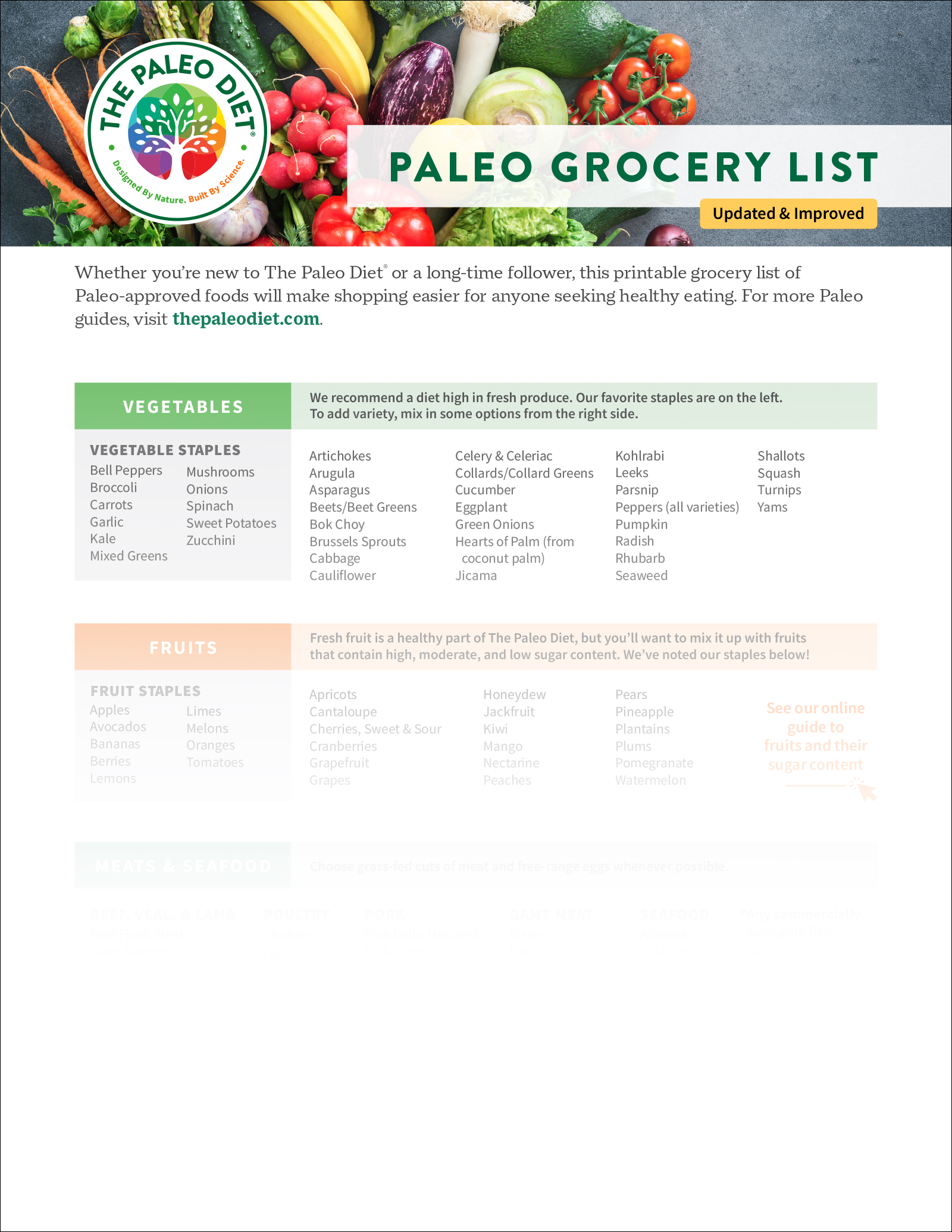
Sign up to get info on healthy nutrition, free recipes, meal prepping, and the latest health research. New subscribers will also receive our Official Paleo Grocery List!
