Exploring Common Food Preservatives and Why They’re Used

When you look at an ingredient label, it’s easy to feel uneasy about preservatives. Names like sodium benzoate and butylated hydroxytoluene don’t match our idea of “real food.” But before we dismiss preservatives altogether, it helps to ask a practical question: What would our food system look like without them?
This isn’t just a theoretical exercise. In the late 1800s and early 1900s—before industrial food production, refrigeration, and modern food safety laws—things were very different. Meat was butchered locally or preserved with salt, smoking, or drying. Families canned produce using sugar, salt, and vinegar. Refrigeration was rare, so people bought food daily.

Foodborne illnesses were common, and botulism killed entire families. Meat spoiled quickly and people accepted mold and rancid food as normal. As food production became more industrialized and people moved away from farms, foods had to survive storage, shipping, and longer shelf lives. Synthetic preservatives, introduced in the 1940s, helped solve these problems.
Common Food Preservatives: Safe, Questionable, or Concerning?
Foods at the heart of The Paleo Diet® like fresh meat and fish, eggs, vegetables, fruits, nuts, and seeds tend to be outside the synthetic-preservative discussion. However, preservatives are relevant in four categories that often slip into otherwise “clean” carts, including jerky, frozen seafood, dried fruits, and bottled sauces, dressings, and condiments. Though many of the following are found in foods that are outside of a Paleo diet, knowing about these common preservatives can still be useful for selecting Paleo-adjacent options that support healthy living.
Butylated Hydroxyanisole (BHA)
BHAis a synthetic antioxidant used in cereals, snack foods, chewing gum, processed meats, and packaged baked goods to prevent fats and oils from becoming rancid.
Potential concern: The United States National Toxicology Program lists BHA as “reasonably anticipated to be a human carcinogen” based on animal studies. Tumors have been observed primarily in the rodent forestomach, an organ humans lack, which is why the human relevance has long been debated. Concerns about endocrine activity have also been raised in animal models. There is particular concern when BHA is combined with monosodium glutamate (MSG).1,2
Status: On February 10, 2026, the Food and Drug Administration (FDA) issued a Request for Information on the use and safety of BHA as part of its post-market food chemical assessment program. Comments closed April 13, 2026. This is information-gathering, not a proposed ban, however West Virginia passed a bill in March 2025 that prohibits BHA in foods sold in the state beginning January 1, 2028.
RELATED: Glossary of Common Additives, Their Uses, and Health Concerns
Butylated Hydroxytoluene (BHT)
Like BHA, BHT is a synthetic antioxidant used in cereals, chips, crackers, chewing gum, and frozen foods to prevent fats and oils from becoming rancid.
Potential concerns: Animal studies suggest that high doses of BHT may increase the risk of cancer, cause liver enlargement, and disrupt hormones. The amounts used in these studies are much higher than what people usually eat, but consumer groups are still worried.
Status: FDA has placed BHT on its list for public review and expects to conduct a similar assessment after BHA. BHT is restricted or banned in some countries.3
Parabens
Parabens (especially propylparaben) is a family of antimicrobials used in jams, dairy products, and baked goods to prevent mold. Parabens are most often added to baked goods, tortillas, and some processed foods to prevent mold and yeast.
Potential concerns: Animal studies suggest parabens might disrupt hormones. They are banned in the European Union but still allowed in some U.S. foods.
Status: Propylparaben has the highest profile and is currently Generally Recognized as Safe (GRAS) for use as an antimicrobial agent in food at levels up to 0.1%. This status is currently under review due to potential endocrine-disrupting effects. California has banned its use, effective January 2027, and West Virginia’s ban begins January 2028.
Potassium Sorbate
Commonly found in cheese, yogurt, dried fruit, wine, tortillas, and baked goods to prevent mold and yeast growth.
Potential concerns: Potassium sorbate is generally considered safe, but some lab studies suggest that very high amounts (over 3 mg) could cause changes or damage to cells. The European Food Safety Authority has approved its use.4
Status: The evidence in humans remains limited and is considered low risk at low to normal levels.
Sodium Benzoate
One of the most common preservatives in acidic foods such as soda, fruit juice, pickles, sauces, and salad dressings, sodium benzoate is used to prevent mold, yeast, and bacterial growth.
Potential concerns: Sodium benzoate is being watched because it can form benzene, a cancer-causing chemical, when mixed with vitamin C and exposed to heat or light. Many manufacturers have changed their products to lower this risk. Some studies also suggest that sodium benzoate, when combined with artificial food dyes, may make hyperactivity worse in some children. Recent research in 2026 links it to changes in the gut microbiome.5-7
Status: Sodium benzoate is not currently a top FDA review target, but some beverage companies have reformulated, reduced, or removed it due to consumer concerns about benzene formation when combined with vitamin C.
Sodium Nitrite and Nitrate
Sodium nitrite and sodium nitrateare used in bacon, hot dogs, deli meats, and cured meats to prevent botulism (by inhibiting Clostridium botulinum), fix color, develop flavor, and extend shelf life. Without nitrite, shelf-stable cured meats as we know them would not be safe.
Potential concerns: Under high-heat cooking and in the presence of certain amines in meat, nitrite can form N-nitroso compounds known as nitrosamines, several of which are carcinogenic in animals and linked to cancer risk in humans.8-11
RELATED: Why Processed Meats Aren’t Paleo
Status: In 2015, the International Agency for Research on Cancer classified processed meat as Group 1 (carcinogenic to humans), based on sufficient evidence linking consumption to colorectal cancer. No FDA reassessment is underway; the issue is being driven by consumer pressure and labeling-reform advocacy rather than rulemaking. Both Consumer Reports and the Center for Science in the Public Interest have petitioned U.S. Department of Agriculture to revise these labeling rules.
Uncured meats and no–sodium nitrite claims: Processed meat brands increasingly market “uncured” meats preserved with cultured celery powder or celery juice instead of synthetic sodium nitrite. Celery powder contains naturally occurring nitrate that’s converted to nitrite by added starter cultures, so it is chemically the same nitrite, just from a different source. The “uncured” label is regulatory language, not a chemistry claim. Some “natural” cured meats can sometimes deliver comparable or higher nitrite levels than sodium nitrite. Studies are ongoing to establish whether the use of these ingredients poses the same health risks as synthetic nitrites and nitrates.12
Sulfites
Sulfur-based compounds, including sulfur dioxide, sodium bisulfite, and potassium metabisulfite, are found in dried fruits, wine, processed potatoes, condiments, and shrimp to extend shelf life, prevent browning, and inhibit microbial growth.
Potential concerns: The American Dermatitis Society deemed sulfites the “allergen of the year” in 2024 due to their role in allergic reactions. They warn that ingestion or skin contact with sensitive individuals can cause allergic reactions. 13-16
Status: In 1986, following identification of numerous cases of sulfite-induced asthma—including reactions to salad-bar produce—the FDA prohibited the use of sulfites on fruits and vegetables intended to be served raw or presented fresh to the public. The FDA also requires sulfites to be declared on labels when present at 10 ppm or higher. Sulfites remain permitted in dried fruit, wine, and some processed foods.
Sodium Tripolyphosphate (STPP)
This preservative is used to retain moisture and prevent texture and color changes in scallops, shrimp, and seafood. (Sodium bisulfite, potassium sorbate, and sodium benzoate are also used in shrimp to prevent blackening.)
Potential concerns: As with other sulfites, these ingredients may cause allergic or negative reactions in sensitive individuals. 17
Status: STPP and other seafood preservatives have GRAS status and must be declared on package labeling.
Preservative Reformulation Is on the Rise
Today, legacy preservatives are being reviewed by the FDA’s Human Food Program, and some states are taking action ahead of the federal government. In anticipation, food companies are reformulating preservatives, using:
- Rosemary extract
- Mixed tocopherols (vitamin E)
- Ascorbyl palmitate
- Celery seed powder or juice extract (see above)
- Oregano extract
- Fermentation
Smart Shopping Tips for Paleo Consumers
Preservatives help keep our food safe, but they are not without concern. For those already eating a Paleo diet, exposure to many preservatives (especially those found in baked goods, cured meats, and snack foods) will already be limited. But to further reduce preservative intake in the Paleo and non-Paleo foods that make up the diet, try these tips:
- Build the base of your diet from foods that don’t need preservatives at all, such as fresh and frozen meat, fish, eggs, produce, nuts, and seeds.
- Avoid cured meats and read jerky labels carefully (or make your own). “Uncured” and “no nitrates added” do not mean nitrite-free; celery powder, celery juice, or cultured celery extract indicate the same active chemistry as conventionally cured meats.
- Choose fresh fruits over dried where possible, or opt for “no sulfites added” when purchasing dried fruits. Read frozen seafood labels for sulfur dioxide, sodium bisulfite, or potassium metabisulfite.
- Look for products preserved with natural fermentation, prioritizing low-sodium or low-sugar formulations.
- Vary brands and products so you’re not exposed to the same additives day after day.
- Watch your state and federal rulebooks. California, West Virginia, Texas, Louisiana, and others have moved ahead of the FDA on specific additives, and the FDA’s public list of chemicals under review is the most reliable place to track what’s coming next.
References
- Torres-Zárate C, Navarro-Mabarak C, Hernández-Ojeda S, et al. Effect of monosodium glutamate and butylated hydroxyanisole on inflammatory responses, oxidative stress, and Cytochrome P450 epoxygenases regulation in rat liver and cerebral cortex. Food Chem Toxicol. Published online April 14, 2026. doi: 10.1016/j.fct.2026.116097.
- Zhang XJ, Diao MN, Zhang YF. A review of the occurrence, metabolites and health risks of butylated hydroxyanisole (BHA). J Sci Food Agric. 2023;103(13):6150-6166. doi:10.1002/jsfa.12676
- Pu MJ, Zhu HP, Hao YX. Zhonghua Yu Fang Yi Xue Za Zhi. 2025;59(11):1972-1977. doi:10.3760/cma.j.cn112150-20250421-00336
- EFSA ANS Panel (EFSA Panel on Food Additives and Nutrient Sources added to Food), 2015. Scientific Opinion on the re-evaluation of sorbic acid (E 200), potassium sorbate (E 202) and calcium sorbate (E 203) as food additives. EFSA Journal 2015; 13(6):4144, 91 pp. doi:10.2903/j.efsa.2015.4144
- Dong Y, Xie C, Du B, et al. Trans-generational effect of sodium benzoate on development and gut microbiota of Drosophila melanogaster. Ecotoxicol Environ Saf. 2026;314:120046. doi:10.1016/j.ecoenv.2026.120046
- Khan S, Attaullah M, Zubair M, Kashif Khan M, Ali R, Jahan S. Sodium benzoate induces reproductive toxicity via hormonal disruption, ovarian damage and altering kisspeptin/RFRP-3 expression. Regul Toxicol Pharmacol. 2026;168:106069. doi:10.1016/j.yrtph.2026.106069
- Khan S, Attaullah M, Jahan S, Ali R, Zubair H, Hamayoun N. Sodium benzoate exposure disrupts HPG-axis in male rats: insights into oxidative stress, hormonal dysregulation, histopathology and kisspeptin/RFRP-3 expression. J Mol Histol. 2025;56(5):319. Published 2025 Sep 18. doi:10.1007/s10735-025-10611-3
- Liu Y, Liu Y, Liu Y, et al. Sodium nitrite impairs reproduction in female mice by disrupting ovarian steroid hormone synthesis and lipid metabolic pathways. Ecotoxicol Environ Saf. 2026;309:119631. doi:10.1016/j.ecoenv.2025.119631
- Abdukadirova LK, Salomova FI, Rakhimov BB, Akhmadalieva NO, Sadullaeva K. Assessment of mutagenic effects: Combined impact of nitrogen-fixing compounds and phenol on plant and animal organisms. Med J Malaysia. 2025;80(4):490-495. https://pubmed.ncbi.nlm.nih.gov/40740093/
- Niklas AA, Borge GIA, Rødbotten R, et al. Levels of nitrate, nitrite and nitrosamines in model sausages during heat treatment and in vitro digestion – The impact of adding nitrite and spinach (Spinacia oleracea L.). Food Res Int. 2023;166:112595. doi:10.1016/j.foodres.2023.112595
- Keuleyan E, Bonifacie A, Sayd T, et al. In vitro digestion of nitrite and nitrate preserved fermented sausages – New understandings of nitroso-compounds’ chemical reactivity in the digestive tract. Food Chem X. 2022;16:100474. Published 2022 Oct 13. doi:10.1016/j.fochx.2022.100474
- Di Nunzio M, Loffi C, Montalbano S, et al. Cleaning the Label of Cured Meat; Effect of the Replacement of Nitrates/Nitrites on Nutrients Bioaccessibility, Peptides Formation, and Cellular Toxicity of In Vitro Digested Salami. Int J Mol Sci. 2022;23(20):12555. Published 2022 Oct 19. doi:10.3390/ijms232012555
- Choi S, Zemlok SK, Yu J, Adler BL. Sulfites: The 2024 American Contact Dermatitis Society Allergen of the Year. Cutis. 2024;114(5):141-143. doi:10.12788/cutis.1124
- Timbo B, Koehler KM, Wolyniak C, Klontz KC. Sulfites–a food and drug administration review of recalls and reported adverse events. J Food Prot. 2004;67(8):1806-1811. doi:10.4315/0362-028x-67.8.1806
- Choi S, Zemlok SK, Yu J, Adler BL. Sulfites: The 2024 American Contact Dermatitis Society Allergen of the Year. Cutis. 2024;114(5):141-143. doi:10.12788/cutis.1124
- Timbo B, Koehler KM, Wolyniak C, Klontz KC. Sulfites–a food and drug administration review of recalls and reported adverse events. J Food Prot. 2004;67(8):1806-1811. doi:10.4315/0362-028x-67.8.1806
- Vally H, Misso NL. Adverse reactions to the sulphite additives. Gastroenterol Hepatol Bed Bench. 2012;5(1):16-23. https://pmc.ncbi.nlm.nih.gov/articles/PMC4017440/
Kimberly Lord Stewart
Kimberly Lord Stewart is an author, journalist, and culinary expert. Her work highlights the importance of incorporating whole foods into daily diets and emphasizes the connection between food and overall well-being.
More About The Author
Grocery Shopping



The Paleo Diet® Newsletter
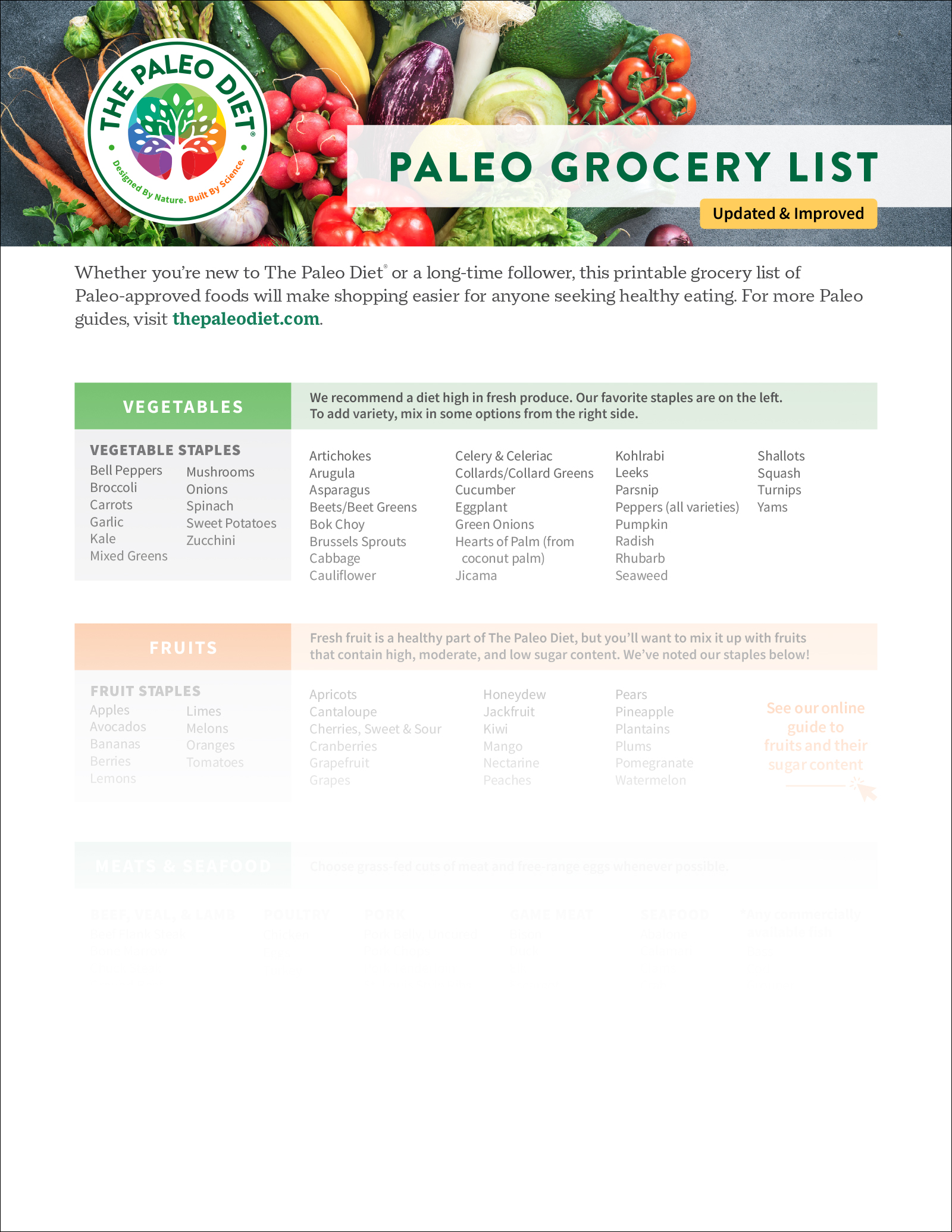
Sign up to get info on healthy nutrition, free recipes, meal prepping, and the latest health research. New subscribers will also receive our Official Paleo Grocery List!
