Tips for Preventing Food Contamination at Home
The Paleo Diet® is supported by users like you. As an Amazon Associate, we earn commission from qualifying purchases at no extra cost to you. We recommend only the products we trust for the best experience.
Foodborne illness, largely referred to as “food poisoning,” sickens 1 in 6 Americans yearly,1 despite the U.S. food supply being considered among the safest worldwide. While followers of The Paleo Diet® sidestep the risks of foodborne illness carried in raw wheat flour, dairy, and beans, other foods must still be handled carefully to avoid food contamination. The U.S. Center for Disease Control and Prevention (CDC) estimates that out of the 48 million people who contract a foodborne illness each year, 128,000 will be hospitalized.2

“Although most healthy people will recover from a foodborne illness within a short period of time, some can develop chronic, severe, or even life-threatening health problems,” according to the Food and Drug Administration (FDA).1
Many serious cases stem from the mishandling of animal proteins, both raw and cooked, as well as contaminated produce. If your family includes young children, pregnant women, elderly persons, or those with weakened immunities, safe food handling practices can greatly reduce your risk of foodborne illness. See our food-safety advice below to minimize your chance of food contamination at home.
Best Kitchen Hygiene
These tips are useful to remember no matter what you’re making in the kitchen.
Keep It Cold
Ensure all raw meats and eggs are refrigerated within two hours of purchase to ensure the longest possible storage. While raw, fish, shellfish, poultry, and ground meats have the shortest life and need to be cooked within 1-3 days of purchase. Cuts of beef, veal, lamb, and pork should be cooked within a 3–5-day window. Raw eggs will generally last 3–5 weeks.3
Wash Your Hands
Handwashing reduces the spread of all germs, so always begin a cooking project by washing hands, regardless of what you’re making. To wash well, wet hands, then use a generous amount of soap and lather for 20 seconds, making sure to coat both the palms and the backs of your hands before rinsing thoroughly and patting dry.
Prep Non-Meat Foods First
If your meal includes a side or salad that won’t be cooked alongside the meat, deal with those ingredients first to reduce cross-contamination. Then cover or tuck dishes safely out of the germ zone before prepping your meat.
Use a Clean Cutting Board
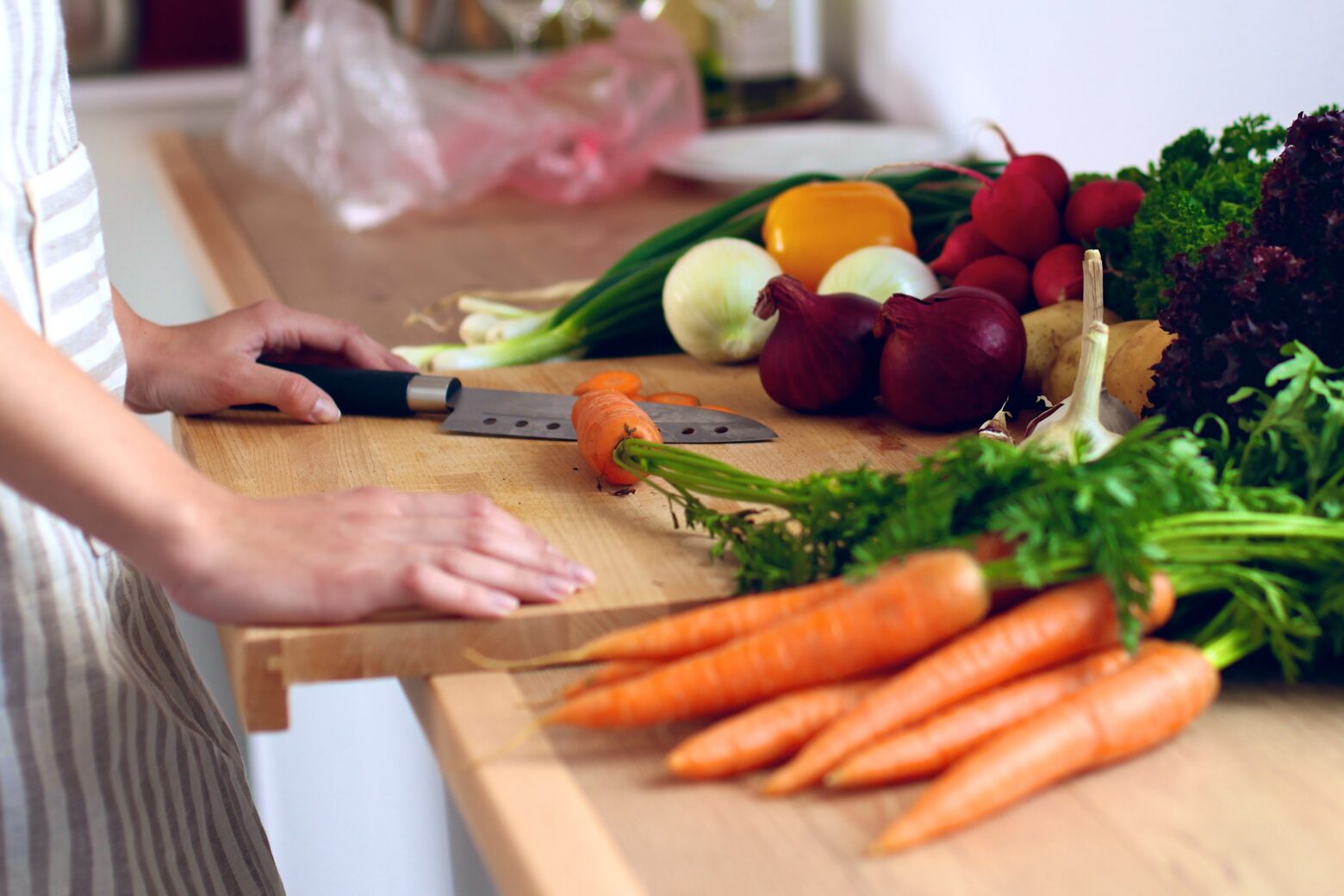
Cutting boards specifically for meat (labelled “meat” if you have young members of your family who like to cook) can help reduce cross contamination. If the material can handle it, clean cutting boards in the dishwasher, especially if they’re used for raw meat. Non-porous cutting boards may provide peace of mind because they can be sanitized in the dishwasher.4
RELATED: The Best Cutting Boards for Your Kitchen
Healthy Food Storage
How you store your food can lower the risk of food contamination.
Cooked Meat Dishes
After you’ve cooked meat, it should be eaten within 3-4 days. The U.S. Department of Agriculture (USDA) says, “To prevent bacterial growth, it’s important to cool food rapidly so it reaches as fast as possible the safe refrigerator-storage temperature of 40°F or below.” They recommend dividing large amounts of food into smaller, ideally glass, containers so that everything cools down more rapidly in the refrigerator.5
Cooked proteins, even whole casseroles, can be covered and frozen “indefinitely” in 0°F deep freeze. The quality of frozen foods does begin to decline after about 2 months.7
Frozen Leftovers
According to the USDA, previously frozen food that has been thawed or reheated to 165°F is safe to refreeze. Even if you only need a portion of frozen food, it can be returned to the freezer again after thawing. 5
Safe ways to thaw leftovers include:
- Using the microwave’s “defrost” function, which is the fastest. Make sure to check the temperature on the food has reached 165°F on a food thermometer before eating.
- Cold water thawing, which requires careful attention, and the leftovers must be in a leakproof bag in order to be immersed in water.
- Leaving the leftovers in the refrigerator—this can sometimes take 1-2 days, depending on the dish’s size, but is the safest route as the temperature is stable.
Best Practices for Cooking Meat
Raw and undercooked meat can easily spread bacteria. Take these precautions when cooking with it to prevent potential food contamination.
Do Not Wash the Meat
Rinsing meat before use spreads bacteria. In a USDA study, 60% of people who washed raw poultry had bacteria in their sink afterward. After they cleaned the sink, 14% of people still had bacteria in it, and 26% of study participants transferred bacteria into their ready-to-eat salad.6
Instead of washing, use paper towels to wipe off any bits or packaged fluids you don’t want on your cut of raw meat. Paper towels absorb bacteria without spreading it. Toss the towels and rewash your hands.
Sanitize Surfaces
Once your meat is prepared for cooking, sanitize all surfaces—including countertops, sink and utensils—and wash your hands again.
Marinate Meat in the Refrigerator
This allows a longer window for your meat to safely absorb the seasonings while maintaining a cold environment that discourages the spread of bacteria.
Let Raw Meat Sit on the Counter Before Cooking
We’ve probably all heard that it’s important to allow meat to reach room temperature before cooking, but why? Logically, if you’re trying to cook a roast to 160ºF, the center of a refrigerated piece of meat is going to cook differently than its exterior. When meat sits on the counter (on top of a plate, ideally), the entire piece of meat gently warms, and it will cook more evenly.
“You don’t have to go crazy waiting for hours until the meat is absolutely 72° and taking the internal temperature before you start cooking,” Claire Saffitz writes for Bon Appetit magazine.7 “Just take whatever you’re cooking out of the fridge and let it start tempering in whatever time you have.”
Cook Meat to a Safe Temperature
To kill bacteria, meat needs to be heated to a minimum temperature. USDA food safety experts encourage the use of dial or digital food thermometers.8 Insert the thermometer into the center of your cooked meat, ensuring the tip is surrounded by flesh, not touching bone. Mound ground meat into a pile and insert the thermometer horizontally through the thickest part.
All red meat cuts—raw beef, pork, lamb, and veal—should have a minimum internal temperature of 145°F before removing the meat from the heat source. If your red meat is ground, the minimum internal temperature for proper cooking should be 160°F.5 Poultry of all types and cuts should always be cooked to a minimum internal temperature of 165°F to be considered safe from pathogens.
Rest Meat After Cooking
“Meat and poultry should rest after cooking and before slicing or carving. That applies to any steak, chop, roast, bird that has been roasted, broiled, grilled, or sauteed,” Dan Souza writes for America’s Test Kitchen, where recipes are improved using scientific techniques. There’s “a 60% decrease in moisture loss by waiting 10 minutes to slice”—meaning your meat stays juicier when you wait 10 minutes to cut into it after cooking.
Throw Away Picnic Perishables
If you’re feeding a crowd, say at a picnic or backyard barbeque, the USDA recommends tossing foods that “have been left in room temperature for more than 2 hours.”8 Their recommendation changes if the temperature the food is sitting in is over 90°F, then it should be thrown out after only 1 hour. Always discard cold leftovers that haven’t been kept cold on a buffet table.
Thaw Safely
Do not set meat on the countertop to thaw! Even using a thaw plate isn’t considered safe. The FDA recognizes only three safe ways to defrost food: overnight in the refrigerator, using a cold-water bath, and the microwave’s “defrost” setting.1
Because differently sized frozen items take different amounts of time to thaw, you’ll need to plan ahead. Thin cuts of meat or even a pound of packaged ground meat are usually thawed overnight in the refrigerator, but a whole bird or a roast will need to thaw 24 hours for every 5 pounds of weight.9
“After thawing in the refrigerator, items such as ground meat, stew meat, poultry, seafood, should remain safe and good quality for an additional day or two before cooking; red meat cuts (such as beef, pork or lamb roasts, chops and steaks) 3 to 5 days,” the USDA asserts.9
Both the FDA and USDA agree that food thawed by the cold-water immersion or microwave methods should be cooked immediately. Once cooked, it can then be refrozen, if desired.1,9
Foodborne Illness and Symptoms
Foodborne illnesses are caused by germs transmitted in food. They generally begin with diarrhea, stomach cramps, nausea, vomiting, or fever. The CDC explains in their post about food poisoning: “Symptoms can range from mild to serious and can last for a few hours or several days. Some germs can make you sick within a few hours after you swallow them. Others may take a few days to make you sick.”10
If your symptoms seem severe, call your doctor. High fevers (over 102°F), bloody diarrhea, and being unable to keep foods down for more than 24 hours are all signs your illness may have been food related.11 Your healthcare provider may test you for a foodborne disease using stool or blood samples.
“It often takes 2 to 3 days to start feeling sick after eating a contaminated food,” the CDC says.11 Reporting your illness helps health departments to identify foodborne outbreaks by tracking reports and looking for groups of people with similar symptoms who visited the same establishments or purchased the same foods.10
You may be asked to write down what and where you ate for the past few days, including any restaurants, parties or events where you consumed food and/or beverages, as well as providing grocery and restaurant receipts.
Reports are necessary to state and local health departments being able to keep our food supply safe. If you made a report and there are similar findings from others, expect to hear back from the health department right away. If the issue is even more widespread, you may also be asked to repeat your story to a federal inspector. When many people become ill from the same source, health departments are able to recall foods or close a restaurant or a food distributor churning out contaminated products, conducting further investigation to figure out exactly how and why.11
Making These Tips a Habit
Avoiding foodborne illness at home requires a little extra planning and attention to detail. While people eating a Paleo diet are able to avoid some risky foods, general kitchen hygiene and keeping foods at the proper temperature are still important. And once these safe processes become second nature to your family, your homemade meals will be further protected against harmful food contamination.
References
- FDA. (2024, March 5). Safe Food Handling. U.S. Food and Drug Administration. https://www.fda.gov/food/buy-store-serve-safe-food/safe-food-handling
- CDC. (2024, May 17). About Food Safety. Food Safety; CDC. https://www.cdc.gov/food-safety/about/index.html
- U.S. Department of Health & Human Services. (2019, June 24). Cold Food Storage Chart. FoodSafety.gov. https://www.foodsafety.gov/food-safety-charts/cold-food-storage-charts
- USDA. (2012). Cutting Boards | Food Safety and Inspection Service. Usda.gov. https://www.fsis.usda.gov/food-safety/safe-food-handling-and-preparation/food-safety-basics/cutting-boards
- USDA. (2020, July 31). Leftovers and food safety | food safety and inspection service. Www.fsis.usda.gov. https://www.fsis.usda.gov/food-safety/safe-food-handling-and-preparation/food-safety-basics/leftovers-and-food-safety
- Washing Raw Poultry: Our Science, Your Choice. (2019, August 20). Usda.gov. https://www.usda.gov/about-usda/news/press-releases/2019/08/20/washing-raw-poultry-our-science-your-choice
- Saffitz, C. (2018, January 22). The Key to Juicy, Perfectly Cooked Meat? Let It Sit Out. Bon Appétit. https://www.bonappetit.com/story/room-temperature-meat-tempering
- Doneness Versus Safety | Food Safety and Inspection Service. (2014). Usda.gov. https://www.fsis.usda.gov/food-safety/safe-food-handling-and-preparation/food-safety-basics/doneness-versus-safety
- USDA. (2013, June 15). The Big Thaw — Safe Defrosting Methods | Food Safety Inspection Service. Www.fsis.usda.gov. https://www.fsis.usda.gov/food-safety/safe-food-handling-and-preparation/food-safety-basics/big-thaw-safe-defrosting-methods
- Centers for Disease Control and Prevention. (2024, May 14). Symptoms of Food Poisoning. Food Safety. https://www.cdc.gov/food-safety/signs-symptoms/index.html
- CDC. (2025, December). What to Do if You Think You Have Food Poisoning. Foodborne Outbreaks. https://www.cdc.gov/foodborne-outbreaks/what-to-do/index.html
Christine Emming
More About The Author
Cooking
The Paleo Diet® Newsletter
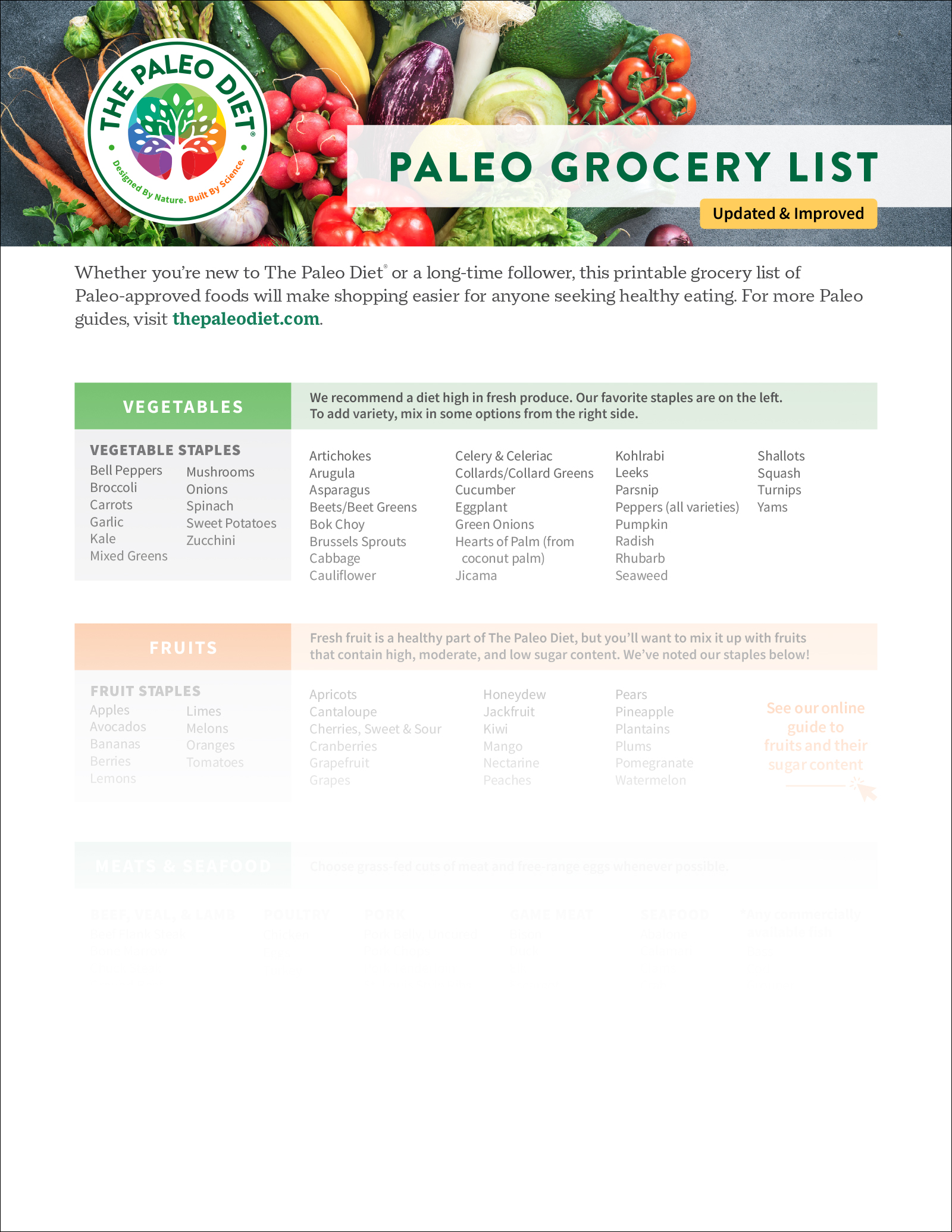
Sign up to get info on healthy nutrition, free recipes, meal prepping, and the latest health research. New subscribers will also receive our Official Paleo Grocery List!
