What’s the Difference Between a Flexitarian Diet and The Paleo Diet?

When it comes to choosing a healthy diet or way of eating, some people go all in with either a completely animal-based (carnivore) or completely plant-based (vegan) diet. However, most people prefer a more balanced or flexible approach. Both The Paleo Diet® and a flexitarian diet include a mix of plant and animal foods. Yet, despite their similarity, these two approaches differ significantly in the foods they encourage and the foods they avoid. So, what exactly separates a flexitarian diet from The Paleo Diet?
What Is a Flexitarian Diet?
The word “flexitarian” is a blend of the words flexible and vegetarian. In general, it refers to a primarily vegetarian diet that still allows some meat in smaller amounts. The exact definition varies widely, even in scientific research.

Some versions of “flexitarian” or “semi-vegetarian” exclude only red meat, while others limit meat overall but encourage fish. Still others avoid non-fish meats while restricting fish to occasional intake. In short, there’s no single “official” flexitarian diet. The common theme is moderation rather than complete elimination of animal products—although the definition of “moderate” varies.1
Many health-conscious people opt for a flexitarian diet because they want to incorporate more plant-based foods into their diet without fully giving up meat. This may be due to health goals, ethical concerns, environmental reasons, or budget constraints.
Flexitarian Diet vs. The Paleo Diet: Which Is Better for Health?
Compared to The Paleo Diet, a flexitarian diet generally allows a wider variety of food groups, including grains, legumes, and dairy products. The Paleo Diet eliminates several modern agricultural food groups such as grains and legumes, along with dairy products, refined sugars, industrial oils, artificial flavors, and other additives. Instead, Paleo emphasizes seafood, vegetables and fruits, meat and eggs, and nuts, seeds, and healthy fats.
Both diets are a major improvement over the Standard American Diet. However, “plant based” doesn’t automatically mean nutrient dense. A whole food–focused flexitarian diet can still include large quantities of less nutritious foods including white potatoes; whole grains like wheat and barley; and legumes like hummus, peanuts, and soy. These foods are higher in refined carbohydrates, contain damaging antinutrients, and may also have higher levels of potentially harmful agricultural chemical residues, like glyphosate.2
While eliminating entire food groups may sound restrictive, doing so contributes to the diet’s excellent nutrient density. Researchers have compared The Paleo Diet with several popular dietary approaches. A large-scale meta-analysis published in 2022 reviewed the health effects of Paleo eating alongside plant-based and Mediterranean-style diets (similar to a flexitarian approach), among others. The researchers found that a Paleo diet performed best for improving biomarkers associated with chronic disease risk.3
More recently, a 2025 systematic review and meta-analysis found The Paleo Diet significantly improved several cardiometabolic biomarkers in 19 randomized controlled trials and showed a reduced risk of all-cause mortality, cancer mortality, and coronary heart disease throughout 12 cohort studies.4
When Does Flexitarian Make Sense?
For someone transitioning away from fast food and convenience meals, a flexitarian diet may be a realistic starting point. After all, a flexitarian diet emphasizes vegetables, more home cooking, more whole foods, and fewer ultra-processed foods. However, there are enough downsides to this diet that it’s likely not a good place to stay for long. Here’s why.
Potential Downsides of a Flexitarian Diet
Depending on how it’s implemented, a flexitarian diet may have several downsides. It can have high levels of antinutrients, fail to emphasize food quality, and be deficient in certain nutrients, including taurine, vitamin B12, amino acids, and omega-3 fatty acids.
- Food Quality Concerns: Modern “plant-based” eating patterns often include refined seed oils, processed protein bars with whey or soy protein isolates, meat substitutes, and highly processed convenience foods. While technically vegetarian-friendly, these foods may still contribute to inflammation and poor metabolic health.5
- Higher Intake of Anti-Nutrients: Legumes, grains, some nuts, and soy-based foods naturally contain compounds like lectins and phytates, which may contribute to digestive issues, autoimmune conditions, or nutrient deficiencies in certain individuals.6,7
- Blood Sugar Challenges: Because many flexitarian diets rely on refined grains, starches, and simple sugars, they can have a higher glycemic load and contribute to blood sugar issues. Some individuals following these diets may experience blood sugar swings, energy crashes, and a constant need to snack.8
- Nutrient Deficiencies: The overall lower protein intake often associated with flexitarian diets may contribute to nutrient deficiencies like amino acids, iron, zinc, and vitamin B12. These deficiencies can become especially critical when it comes to aging, increased physical activity, or connective tissue complaints.9 Though supplementation of these nutrients is possible, it’s best to get them through whole-food sources.
Why Paleo Might Be a Better Diet Long Term
A well-formulated Paleo Diet is likely the better choice for long-term health. As mentioned, this has been proven through scientific research. It has what a flexitarian diet lacks: an emphasis on food quality, lower levels of antinutrients, blood sugar regulation, and plenty of healthy proteins and micronutrients.
Is a whole-food flexitarian diet healthier than the Standard American Diet? In many cases, absolutely. And as The Paleo Diet doesn’t have a set plant-to-animal ratio to follow, it is possible to eat Paleo in a way that would fit the broad definition of flexitarian. However, with the elimination of simple-sugar and antinutrient foods, The Paleo Diet likely offers a stronger nutritional framework over a lifetime.
References
- Derbyshire EJ. Flexitarian Diets and Health: A Review of the Evidence-Based Literature. Frontiers in Nutrition [Internet]. 2017 Jan 6;3(55). Available from: https://www.ncbi.nlm.nih.gov/pmc/articles/PMC5216044/
- Team I. What Crops Are Sprayed with Glyphosate? – The Institute for Environmental Research and Education [Internet]. The Institute for Environmental Research and Education. 2025. Available from: https://iere.org/what-crops-are-sprayed-with-glyphosate/
- Liang S, Mijatovic J, Li A, Koemel N, Nasir R, Toniutti C, et al. Dietary Patterns and Non-Communicable Disease Biomarkers: A Network Meta-Analysis and Nutritional Geometry Approach. Nutrients [Internet]. 2022 Dec 23;15(1):76. Available from: https://pubmed.ncbi.nlm.nih.gov/36615733/
- Bahrami M, Farnush Bakhshimoghaddam, Akram Ahangarpour, Jafarirad S. The Paleolithic diet and chronic disease risk: a GRADE-assessed systematic review and dose-response meta-analysis of prospective cohort studies and randomized controlled trials. Critical Reviews in Food Science and Nutrition. 2025 Oct 23;1–16. https://www.tandfonline.com/doi/full/10.1080/10408398.2025.2576815
- Khalid Sawalha, Tripathi V, Alkhatib D, Luay Alalawi, Mahmood A, Alexander T. Our Hidden Enemy: Ultra-Processed Foods, Inflammation, and the Battle for Heart Health. Cureus [Internet]. 2023 Oct 22;15(10). Available from: https://www.ncbi.nlm.nih.gov/pmc/articles/PMC10663139/
- Zhao Y, Qin G, Sun Z, Che D, Bao N, Zhang X. Effects of Soybean Agglutinin on Intestinal Barrier Permeability and Tight Junction Protein Expression in Weaned Piglets. International Journal of Molecular Sciences. 2011 Nov 29;12(12):8502–12. Available from: https://pubmed.ncbi.nlm.nih.gov/22272087/
- Brouns F. Phytic Acid and Whole Grains for Health Controversy. Nutrients. 2021 Dec 22;14(1):25. Available from: https://pubmed.ncbi.nlm.nih.gov/35010899/
- Clemente-Suárez VJ, Mielgo-Ayuso J, Martín-Rodríguez A, Ramos-Campo DJ, Redondo-Flórez L, Tornero-Aguilera JF. The Burden of Carbohydrates in Health and Disease. Nutrients [Internet]. 2022 Jan 1;14(18):3809. Available from: https://www.mdpi.com/2072-6643/14/18/3809
- Neufingerl N, Eilander A. Nutrient intake and status in adults consuming plant-based diets compared to meat-eaters: A systematic review. Nutrients [Internet]. 2021 Dec 23;14(1):29. Available from: https://pmc.ncbi.nlm.nih.gov/articles/PMC8746448/
Betsy Schroeder
Betsy does research and writing for a few different websites in the natural health field after taking Masters level courses in Nutrition & Functional Medicine through the University of Western States.
More About The Author
Paleo vs. Other Protocols




The Paleo Diet® Newsletter
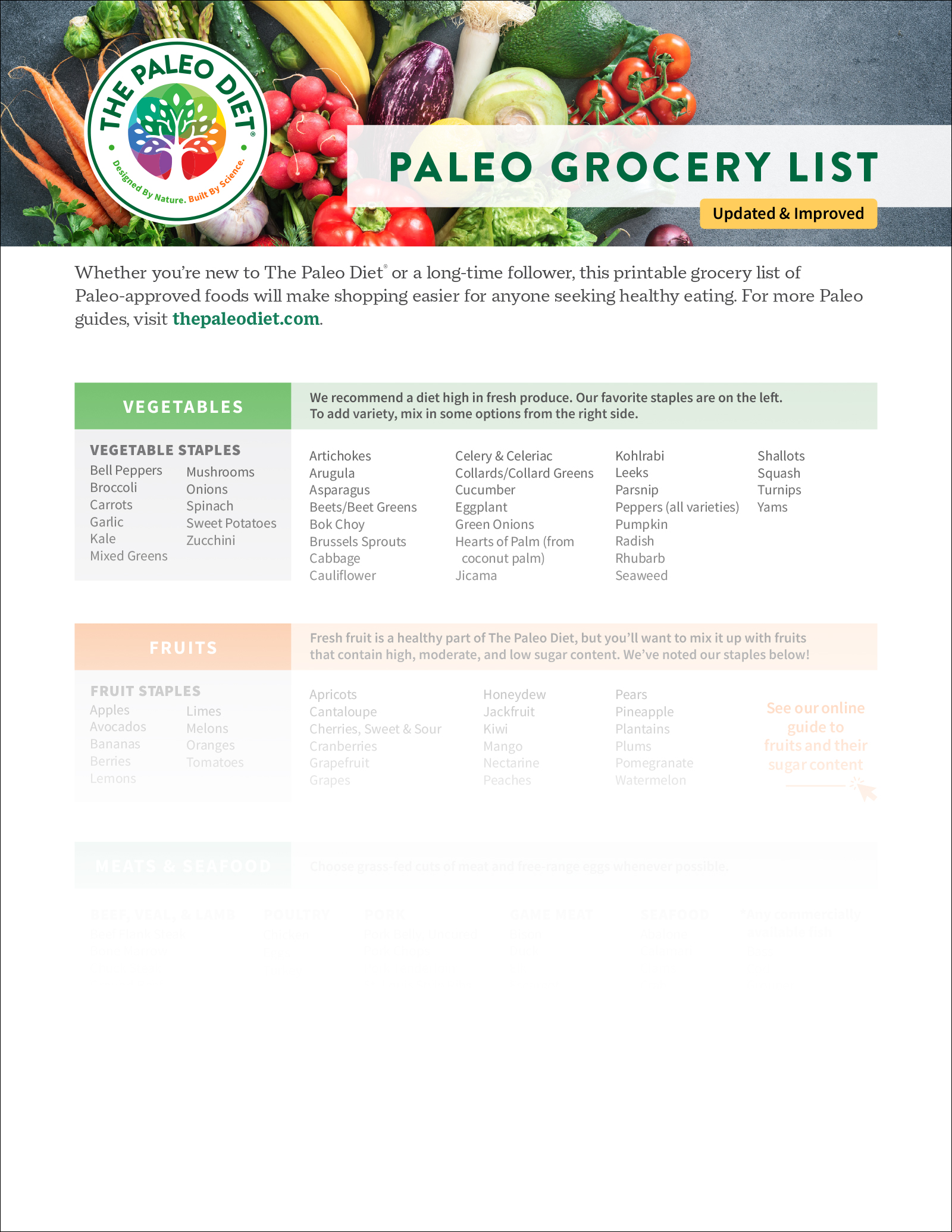
Sign up to get info on healthy nutrition, free recipes, meal prepping, and the latest health research. New subscribers will also receive our Official Paleo Grocery List!
