What’s the Difference Between Gluten Free and Grain Free?

“Grain free” and “gluten free” are often used interchangeably, but they actually mean two different things. A gluten-free diet eliminates gluten, a group of proteins found primarily in wheat, barley, and rye. But it can still include naturally gluten-free grains such as rice, corn, quinoa, buckwheat, millet, and oats. A grain-free diet goes a step further by eliminating grains as a food group, regardless of whether they contain gluten.
This distinction is especially important when it comes to The Paleo Diet®. Paleo is based on how humans evolved to eat before the advent of modern agricultural techniques. Paleolithic hunter-gatherers primarily relied on foods such as meat, seafood, eggs, vegetables, fruits, nuts, and seeds. Grains were not typically part of their diet, in part because many grains are not readily edible without some level of processing.

That is one of the reasons why The Paleo Diet excludes grains as a category. And it means Paleo is gluten free by design because it is grain free. And understanding the difference can help you make sense of everything from a Paleo recipe to the labels you see on products at the grocery store.
Gluten Free Does Not Mean Grain Free
Gluten is a group of proteins found in wheat, barley, rye, spelt, and einkorn. In people with celiac disease or a gluten sensitivity, consuming gluten can trigger an immune response that damages the small intestine or causes physical discomfort. For these groups, avoiding gluten is essential.
But eliminating gluten does not necessarily mean eliminating all grains. Rice, corn, quinoa, buckwheat, millet, amaranth, and other grains are naturally gluten free. Likewise, oats are gluten free, although they can be exposed to gluten during growing, processing, or packaging.
RELATED—Hidden Gluten in Foods: What to Watch for and Why It Matters
This is where the distinction matters. A gluten-free diet asks: “Does this food contain gluten?” A grain-free diet asks: “Is this food a grain?” A gluten-free product may contain rice flour, corn, quinoa, oats, or ancient grains like quinoa or amaranth. Someone following The Paleo Diet would still avoid those ingredients.
For someone who is already gluten-free, The Paleo Diet can easily fit into that lifestyle. In fact, Paleo naturally eliminates many of the major sources of gluten while also going one step further by eliminating all grains.
Why The Paleo Diet Is Grain Free
The exclusion of grains in The Paleo Diet is based on more than gluten. Grains contain compounds known as antinutrients, including phytates, lectins, tannins, saponins, and protease inhibitors. These compounds are part of a plant’s natural defense mechanisms and are particularly common in seeds, where they can help protect the plant until germination.
For example, phytates can bind to minerals such as iron, zinc, calcium, and magnesium, reducing the bioavailability of those nutrients. Some lectins can interact with the intestinal lining and may have negative effects depending on the specific lectin, the amount consumed, and other factors.
Grains’ antinutrient content is only one of the reasons why The Paleo Diet is grain free. It is also about the processing required to make many grains edible, and the fact that they do not fit within the Paleolithic framework on which The Paleo Diet is based. When taking all these factors into account, grains do not align with a nutritious diet.
RELATED: Are Whole Grains Healthy?
The Bottom Line
Being gluten free and being grain free are not the same thing. A gluten-free diet eliminates glutenous grains such as wheat, barley, and rye, but it can still include other grains such as rice, corn, quinoa, and oats. The Paleo Diet eliminates all grains, though they may still be included in moderation as part of an 85/15 approach, where health benefits can still be achieved by following Paleo at least 85% of the time.
If you do choose to include grains in your diet up to 15% of the time, rice and oats are among the better options. Both are naturally gluten free (although cross-contamination can occur during processing) and they contain relatively fewer antinutrients compared with other grains.
The Paleo Diet does not need to be adjusted to be gluten free, because it is gluten free by design. The key is understanding that Paleo takes the concept one step further.
Gluten-free means no gluten. Grain-free means no grains. The Paleo Diet is both.
References
- Gluten-Free Diet: What It Is and What You Can Eat. Cleveland Clinic. Retrieved September 30, 2026, from https://health.clevelandclinic.org/diagnosed-with-celiac-disease-how-and-why-to-follow-a-gluten-free-diet
- Harvard T.H. Chan School of Public Health. (2025). Whole Grains. The Nutrition Source. https://nutritionsource.hsph.harvard.edu/what-should-you-eat/whole-grains/
- National Institute of Diabetes and Digestive and Kidney Diseases. (2019, October 17). Definition & facts for celiac disease. National Institute of Diabetes and Digestive and Kidney Diseases. https://www.niddk.nih.gov/health-information/digestive-diseases/celiac-disease/definition-facts
Ellie Newman
Ellie Newman has a BS in Marketing with a minor in Journalism from the University of Colorado Boulder, where she built a strong foundation in storytelling, strategy, and audience engagement. She has since worked with both startups and large-scale companies, helping grow their marketing, events, and social media presence.
More About The Author
Is It Paleo?

The Paleo Diet® Newsletter
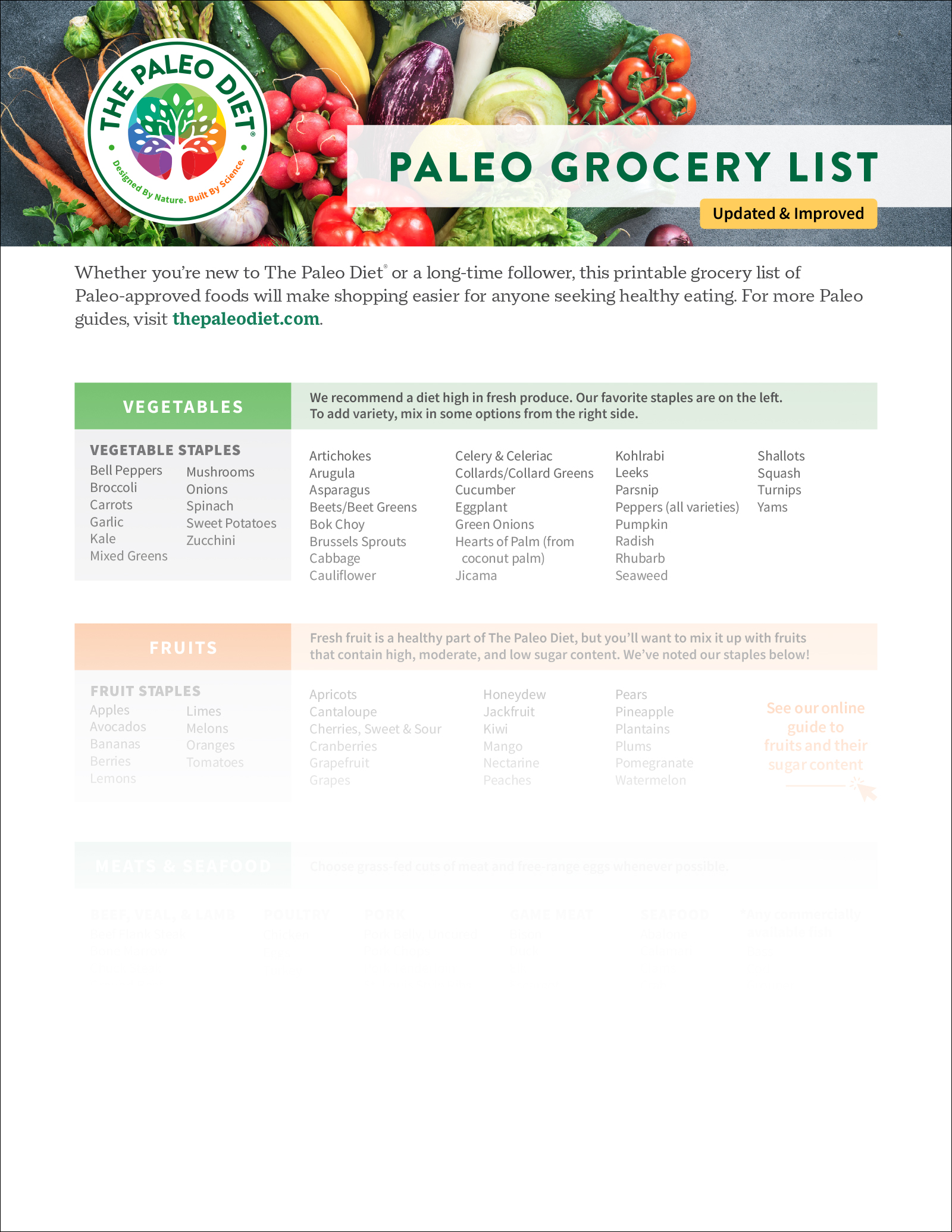
Sign up to get info on healthy nutrition, free recipes, meal prepping, and the latest health research. New subscribers will also receive our Official Paleo Grocery List!
