|
|
|
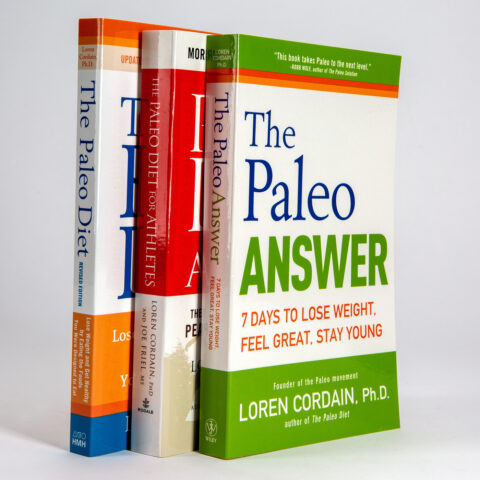
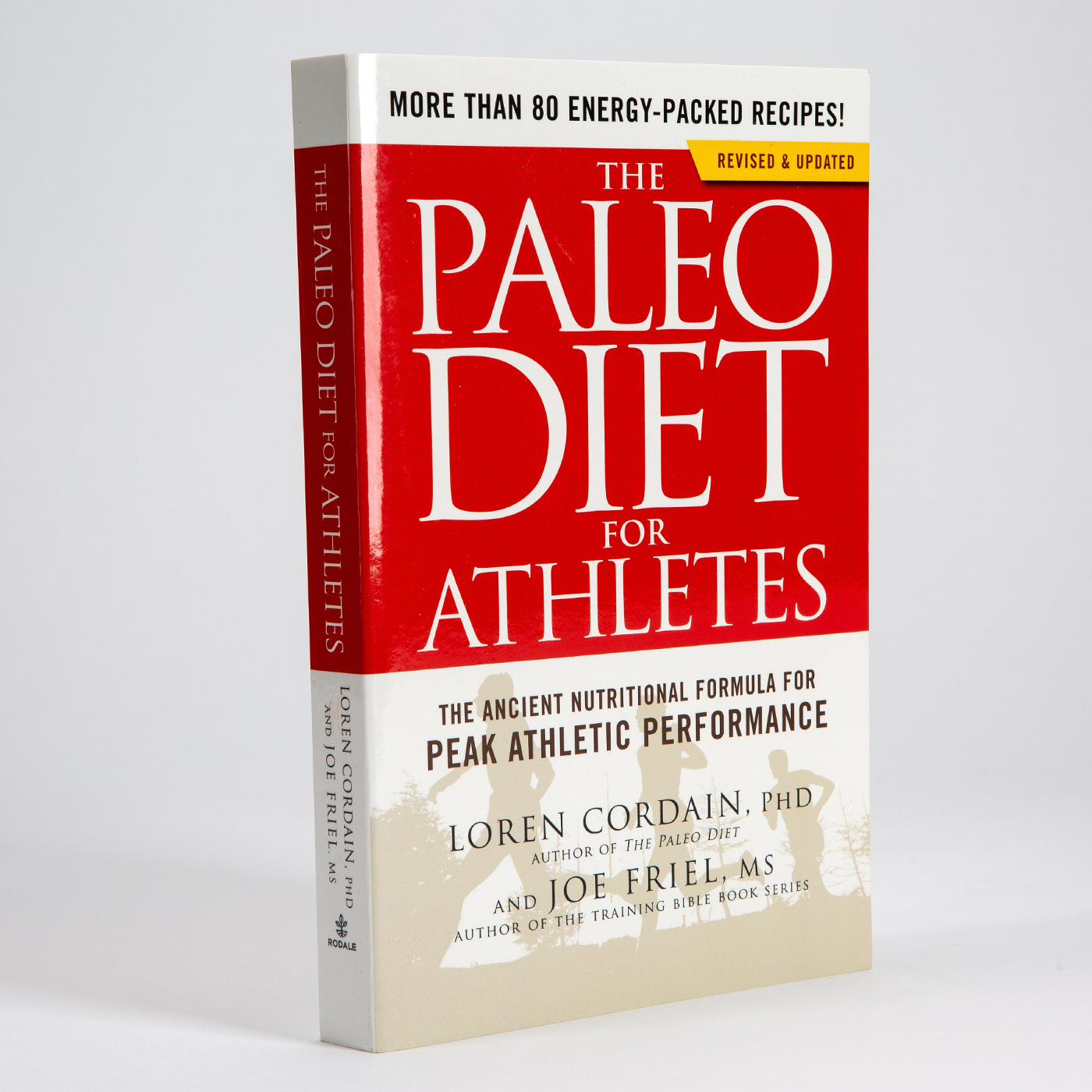
Dr. Loren Cordain and Joe Friel are proud to announce the publication of their new book, The Paleo Diet for Athletes. Subtitled "A Nutritional Formula for Peak Athletic Performance," the book explains how athletes at all levels can improve and enhance their performance. This book is available at your local book store or on line at Amazon.com and Barnes & Noble. These sites contain sample pages, reviews by readers, and other helpful tools.
Just a few of the topics discussed in the book:
- Getting a competitive edge
- Meal timing to turbo-charge performance
- Improve long-term health
- How successful athletes fuel-up for specific sports
- How best to recover after an event
|
Click here for a Runner's World review of The Paleo Diet for Athletes.
Praise for The Paleo Diet for Athletes
I wrote you a while back about your paleo sport nutrition book. It is out
and I have all of my friends and family reading it! Phenomenal work!!!
I am currently being registered as a dietitian and working towards my masters
degree in Nutrition and Physical Performance. I have read nearly everything out
there and NOTHING has spoken the truth as well as your work with the Paleo
diet. I plan to continue on towards my doctorate in either nutrition or
exercise physiology. I would love to do research in the area that you are
working in. Does Colorado State offer doctoral programs in your department? As
I would love to come and work with you or at least perform similar research here
in St. Louis to expand the paleo nutrition research.
Justin
Amazon.com Reader Reviews of The Paleo Diet for Athletes
Straight forward, November 15,
2005 
Reviewer: TitoIt is a straight forward, easy to
understand book that does a good job of showing that the Paleo diet
is not a fad diet, but a well balanced diet with the focus on proper
nutrition. If you're new to the Paleo Diet concept, I suggest
getting this book. |
|
A quick guide to
The Paleo Diet for Athletes
© 2005
by Loren Cordain, Ph.D. and
joe Friel, M.S.
The Paleo Diet for Athletes,
Rodale Press. Written by Loren Cordain,
Ph.D., author of The Paleo Diet, and Joe Friel, M.S., author of numerous
best-selling books on training for endurance athletes, the book applies the
concept of eating as our Stone Age ancestors ate to the extraordinary demands of
training for serious endurance sports. Although it is now the 21st
century athletes still have Old Stone Age (“Paleolithic”) bodies. There has been
no significant change in the human genome in the past 10,000 years.
Physiologically speaking, we are still Paleolithic athletes.
The Paleo Diet
The basic premise of Dr. Cordain’s book, The
Paleo Diet, is that certain foods are optimal for us to eat and others
are non-optimal. The optimal foods are those that we as homo sapiens have been
eating for most of our time on Earth. Only in the last 10,000 years, a mere
blink of the eye relative to our species’ existence, have we been eating
non-optimal foods. Unfortunately, these foods comprise the bulk of what western
society eats today and include such foods as grains, dairy and legumes. Given
that our bodies have not changed, we are simply not well-adapted to these
non-optimal foods and they moderate health and peak performance.
On the other hand, we have been eating optimal
foods – vegetables, fruits, and lean animal protein – for hundreds of thousands
of years and we are fully adapted to them. Science tells us that these foods
also best meet our nutritional needs. Eat these and you will thrive. Avoid or
strictly limit them and your health will suffer.
The Paleo Diet for Athletes
For serious athletes, however,
when it comes to immediately before, during, and directly after workouts we need
to bend the rules of the Paleo Diet a bit since we're placing demands on the
body that were not normal for our Stone Age ancestors. Quick recovery is one of
those demands. This requires some latitude to use non-optimal foods on a limited
basis. The exceptions, as described in the book, are included in the athlete’s 5
stages of daily eating relative to exercise:
Stage I: Eating Before
Exercise
Stage II: Eating During
Exercise
Stage III:
Eating Immediately
After
Stage IV: Eating for Extended Recovery
Stage V: Eating for Long-Term Recovery
For the remainder of your
day, or until your next Stage I, return to eating a Paleo Diet by focusing on
the optimal foods. For more information on the Paleo Diet go to
http://www.thepaleodiet.com.
WHY IS THE PALEO DIET
ERGOGENIC?
1.
Increased intake of branched
chain amino acids (BCAA). Benefits
muscle development and anabolic function. Also counteracts immunosuppression
common in endurance athletes following extensive exercise.
2.
Decreased omega-6:omega-3 ratio.
Reduces tissue inflammation common to athletes while promoting healing.
3.
Alkaline enhancing. Reduces catabolic (breakdown) effect of acidosis on bone and muscle while
stimulating muscle protein synthesis.
4.
High in trace nutrients.
Trace nutrients (vitamins and minerals) are necessary for long-term recovery
from exercise and for health. The most nutrient-dense foods are vegetables and
seafood. On average, vegetables have nearly twice the nutrient density of
grains.
Excerpt from
the
paleo diet for athletes
“Training for endurance sports such as running, cycling, triathlon, rowing,
swimming, and cross-country skiing places great demands on the body, and the
athlete is in some stage of recovery almost continuously during periods of heavy
training. The keys to optimum recovery are sleep and diet. Even though we
recommend that everyone eat a diet similar to what our Stone Age ancestors ate,
we realize that nutritional concessions must be made for the athlete who is
training at a high volume in the range of 10 to 35 or more hours per week of
rigorous exercise. Rapid recovery is the biggest issue facing such an athlete.
While it’s not impossible to recover from such training loads on a strict Paleo
Diet, it is somewhat more difficult to recover quickly. By modifying the diet
before, during, and immediately following challenging workouts, the Paleo Diet
provides two benefits sought by all athletes: quick recovery for the next
workout, and superior health for the rest of your life.”
|
|